Clinical Reasoning Cycle: Complete Guide to the 8 Stages
Clinical decision-making sits at the heart of effective patient care. The Clinical Reasoning Cycle offers healthcare professionals a systematic framework for navigating complex clinical situations, transforming reactive responses into logical, evidence-based judgments that improve outcomes for patients across diverse healthcare settings.
Developed specifically to address gaps in how nurses and clinicians process patient information, this eight-stage model provides a structured approach to gathering cues, analyzing data, and implementing targeted interventions. Understanding this cycle equips healthcare practitioners with tools to deliver safer, more personalized care while building critical thinking skills that transfer across medical specialties.
This guide examines each stage of the Clinical Reasoning Cycle, explores its development and importance in modern nursing practice, and provides practical examples demonstrating how the framework functions in real clinical environments.
What Is the Clinical Reasoning Cycle?
The Clinical Reasoning Cycle represents an eight-stage framework designed to guide nurses and healthcare professionals through systematic, cyclical clinical decision-making processes. Tracy Levett-Jones, Professor of Nursing at the University of Newcastle, introduced this model as a structured approach to enhancing clinical judgment while emphasizing logical, patient-centered thinking over reactive care responses.
Unlike linear problem-solving models, the Clinical Reasoning Cycle operates as a continuous loop where each stage connects back to others, reflecting the iterative nature of clinical practice. The model builds upon earlier frameworks including the “five rights” of clinical reasoning, which established foundational principles around gathering appropriate cues, selecting correct actions, considering context, managing emotions, and centering decisions on the patient.
Core Components of the Model
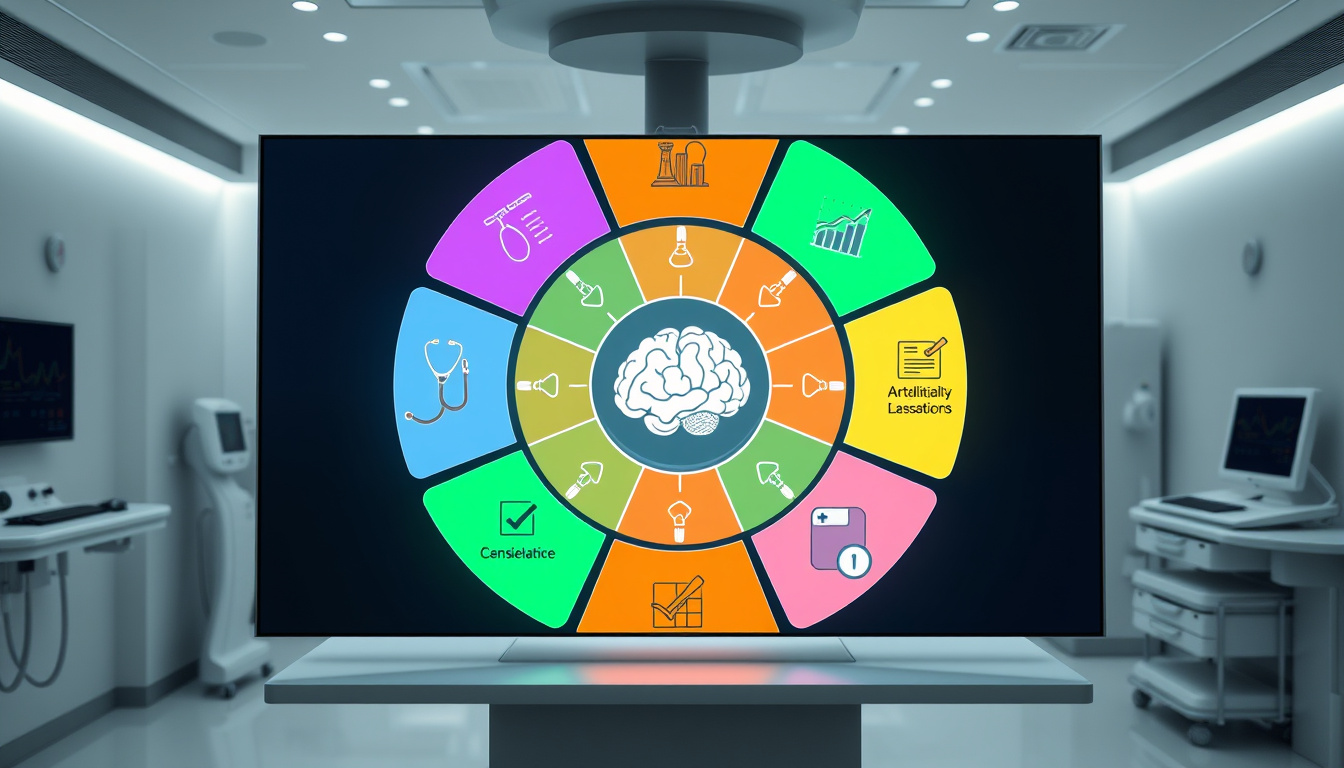
The Clinical Reasoning Cycle comprises several interconnected elements that distinguish it from simple clinical checklists. Central to the framework is its depiction as a clockwise cycle beginning at the 12 o’clock position, visually representing the ongoing, iterative nature of clinical reasoning. Evaluation and reflection occupy the core of this model, signaling that continuous assessment and learning remain fundamental to effective practice.
Each stage flows into the next while maintaining flexibility for practitioners to revisit earlier phases as new information emerges. This design acknowledges that clinical environments constantly present evolving situations requiring dynamic thinking rather than rigid adherence to predetermined sequences.
- The cycle reduces risks associated with poor diagnosis and potentially life-threatening clinical errors
- It promotes holistic consideration of both mental and physical health dimensions
- The framework generates better treatment plans through systematic data analysis
- Healthcare professionals develop improved recovery predictions using evidence-based reasoning
- Nurses construct more comprehensive care plans by following structured progression
- Dynamic adaptation becomes possible when initial interventions require modification
| Stage | Description | Key Action |
|---|---|---|
| 1. Consider Patient | Gather initial facts including age, admission details, current status | Establish context |
| 2. Collect Cues | Review medical history, surgeries, medications, test results, vital signs | Accumulate data |
| 3. Process Information | Analyze patterns in pathological, pharmacological data; identify relevant cues | Interpret findings |
| 4. Identify Problem | Diagnose core issue based on processed data | Define clinical issue |
| 5. Establish Goals | Set specific, time-bound objectives for treatment and recovery | Plan outcomes |
| 6. Take Action | Implement the developed care plan | Execute intervention |
| 7. Evaluate Outcomes | Assess effectiveness using measurable parameters; adjust as needed | Measure results |
| 8. Reflect | Review lessons learned and identify improvements for future cases | Extract learning |
What Are the 8 Stages of the Clinical Reasoning Cycle?
Each phase within the Clinical Reasoning Cycle serves a distinct purpose while connecting to surrounding stages. Healthcare professionals apply these phases iteratively, cycling through them repeatedly until optimal patient outcomes are achieved. The following breakdown examines what occurs at each stage and the specific actions practitioners undertake.
Stage 1: Consider the Patient Situation
The initial phase requires clinicians to gather foundational facts about the patient before deeper analysis begins. This includes demographic information such as age, admission details, presenting complaint, and current clinical status. Establishing this baseline context enables subsequent stages to proceed with appropriate clinical framing.
Stage 2: Collect Cues and Information
During this phase, practitioners conduct comprehensive reviews encompassing medical history, previous surgeries, current medications, laboratory test results, and vital sign trends. Educational resources from nursing programs emphasize that thorough cue collection significantly impacts the accuracy of subsequent reasoning stages.
Stage 3: Process Information
Analysis of collected data reveals patterns that might indicate pathological conditions, pharmacological interactions, or physiological abnormalities. Practitioners identify relevant cues from background noise, distinguishing significant findings that warrant clinical attention from incidental observations.
Stage 4: Identify the Problem or Issue
Based on processed information, clinicians formulate a diagnosis or identify the primary clinical issue requiring intervention. This stage synthesizes previous analytical work into actionable clinical conclusions that guide subsequent planning phases.
Stage 5: Establish Goals
Goal-setting involves defining specific, measurable, time-bound objectives for treatment and recovery. Clear goals provide benchmarks against which intervention effectiveness can later be evaluated, ensuring care remains focused on tangible patient outcomes.
Stage 6: Take Action
Implementation of the care plan represents this stage, where planning transforms into direct patient intervention. Actions range from medication administration to therapeutic procedures, always grounded in the evidence gathered and goals established in earlier phases.
Stage 7: Evaluate Outcomes
Systematic assessment determines whether implemented interventions achieved desired results. Evaluation employs measurable parameters and clinical indicators, with findings informing whether current approaches should continue, modify, or change entirely.
Stage 8: Reflect
The reflection stage closes the loop by prompting clinicians to examine what occurred, identify successful elements, recognize areas for improvement, and extract lessons applicable to future cases. Research published in nursing journals confirms that structured reflection accelerates skill development and reduces recurrence of clinical errors.
While presented as sequential stages, experienced clinicians often move between phases as new information emerges. A patient presenting with chest pain might trigger simultaneous cue collection and initial processing, with problem identification refined as additional data becomes available.
Who Developed the Clinical Reasoning Cycle?
Tracy Levett-Jones, a Professor of Nursing at the University of Newcastle in Australia, developed the Clinical Reasoning Cycle as an educational framework to address systematic gaps in clinical judgment training for nursing students. Her work emerged from recognition that traditional nursing education often failed to adequately prepare graduates for the complex, dynamic decision-making required in clinical practice environments.
Background and Evolution
Levett-Jones introduced the CRC as a structured framework emphasizing logical, patient-centered thinking over reactive care approaches. The model builds upon foundational work in clinical reasoning, incorporating elements from earlier frameworks including the “five rights” of clinical reasoning established through peer-reviewed research. Academic publications from 2009 document the theoretical foundations underpinning the framework’s development.
The model draws from educational theory linking student learning to real-world practice requirements. By positioning evaluation and reflection at its core, the framework ensures that clinical reasoning becomes an ongoing developmental process rather than a one-time event. Instructor resources from University of Tasmania provide additional pedagogical context for how the model integrates into nursing curricula.
The framework has been adopted across nursing programs internationally, with instructor resources including diagrams, scenario-based learning materials, and assessment tools developed to support consistent implementation in educational settings.
Why Is the Clinical Reasoning Cycle Important in Nursing?
Clinical reasoning directly influences patient safety, treatment effectiveness, and healthcare outcomes. The Clinical Reasoning Cycle provides nurses with a reliable methodology for processing complex clinical information, reducing cognitive overload while ensuring comprehensive consideration of relevant factors before intervention decisions.
Improving Decision-Making Quality
The framework promotes analytical thinking that produces personalized, evidence-based care rather than standardized responses applied uniformly regardless of individual patient circumstances. By systematically working through each phase, nurses develop stronger connections between clinical observations and appropriate responses, building expertise that transfers across patient populations and clinical settings.
In patient care scenarios, the CRC ensures evidence-based decisions addressing conditions such as hypertension management or fluid balance restoration, leading to safer interventions with measurable outcomes. Applied examples demonstrate how the framework guides nurses through complex cases involving multiple interacting clinical factors.
Reducing Clinical Errors
Systematic reasoning reduces risks associated with poor diagnosis and potentially life-threatening errors. When nurses follow structured progression through the clinical reasoning stages, critical information receives appropriate attention rather than being overlooked amid time pressures or competing demands. The reflection component provides additional error-prevention value by establishing organizational learning that benefits future patients.
While the framework significantly improves reasoning quality, its effectiveness depends on accurate information input. Incomplete data collection or flawed initial assessment can propagate errors through subsequent stages, making thoroughness in early phases essential. For a deeper understanding of how this framework can be applied, explore the details of the Clinical Reasoning Cycle at Irene Epple-Waigel Ärztin Allgäu.
How Do You Apply the Clinical Reasoning Cycle in Practice?
Practical application of the Clinical Reasoning Cycle involves integrating its principles into daily clinical workflows rather than treating it as a separate analytical exercise. Healthcare professionals apply the framework iteratively, cycling through stages as patient conditions evolve and new information becomes available.
Step-by-Step Walkthrough
Consider a patient presenting with fever and elevated blood pressure. The clinical reasoning process begins with considering the patient situation, noting that a 58-year-old individual was admitted 24 hours prior following a surgical procedure. Cue collection then encompasses reviewing their surgical history, current medication regimen including any new prescriptions, and recent vital sign trends showing progressive temperature elevation alongside blood pressure changes.
Information processing reveals patterns suggesting potential post-operative infection or inflammatory response, possibly related to fluid shifts or medication effects. This leads to problem identification, perhaps pointing toward surgical site infection requiring further investigation. Goals might include reducing temperature to baseline within 24 hours while maintaining hemodynamic stability.
Actions involve implementing monitoring protocols, adjusting fluid administration, and preparing for possible intervention. Outcome evaluation occurs through regular reassessment of temperature curves, inflammatory markers, and vital sign patterns. Reflection captures lessons about early recognition indicators and optimal monitoring frequency for similar future cases.
Real-World Case Studies
Educational resources document numerous scenarios demonstrating CRC application across diverse clinical contexts. Documented cases include fluid management challenges, persistent pain assessment, substance abuse evaluation, behavioral concerns in acute settings, and dementia care planning. Case study materials walk through complete eight-stage applications with scene changes and reflective epilogues illustrating how practitioners refine their reasoning over time.
A documented case study involving a patient identified as Mrs. ABC demonstrates how the CRC guides iterative refinement of clinical actions. The practitioner applied each stage systematically, using reflection to identify areas where initial assumptions required adjustment and extracting lessons applicable to subsequent patient encounters.
Theoretical Foundations and Development Timeline
Understanding when and how the Clinical Reasoning Cycle emerged provides context for its design principles and intended applications. The framework developed within broader movements toward evidence-based practice and structured clinical education that characterized nursing pedagogy reforms during the late 2000s.
- Early 2000s — Foundational research on clinical reasoning principles establishes theoretical groundwork
- 2009 — Key academic publications document the five rights of clinical reasoning
- 2010-2012 — Levett-Jones publishes framework materials and educational resources
- 2013-Present — Widespread adoption across nursing curricula internationally
- Ongoing — Instructor resources, scenario libraries, and assessment tools continue expanding
Available documentation indicates development occurred primarily within Australian nursing education contexts before international adoption. The framework’s continuum-like flexibility allows adaptation across diverse clinical specialties, contributing to its sustained relevance in evolving healthcare environments.
Established Facts and Remaining Uncertainties
The Clinical Reasoning Cycle represents a well-established educational framework with documented implementation across nursing programs. However, certain aspects remain subject to interpretation or require additional research validation.
| Established Information | Remaining Questions |
|---|---|
| Eight distinct stages structure the framework | Optimal assessment methods for evaluating student competence |
| Developed by Tracy Levett-Jones at University of Newcastle | Specific metrics for measuring framework effectiveness |
| Evaluation and reflection occupy the cycle’s core | Standardized approaches to scenario development |
| Applicable across aged care, acute, and complex cases | Extent of international curriculum standardization |
| Benefits include error reduction and improved outcomes | Long-term outcomes data comparing framework users versus non-users |
Current literature lacks comprehensive longitudinal studies quantifying the framework’s direct impact on patient outcomes. Existing evidence supports theoretical benefits and educational effectiveness, while outcome measurement remains an area warranting further investigation.
Integration with Broader Healthcare Contexts
The Clinical Reasoning Cycle exists within larger ecosystems of clinical decision-making frameworks, patient safety initiatives, and evidence-based practice movements. Its cyclical nature reflects contemporary understanding that clinical reasoning requires continuous refinement rather than linear completion.
Patient safety guidelines from international health organizations emphasize systematic approaches to clinical decision-making that align with the structured reasoning the CRC provides. Healthcare institutions increasingly recognize that reasoning frameworks support consistency in care quality while accommodating the individual variability inherent in patient presentations.
Novice nurse training programs benefit particularly from explicit reasoning frameworks, which provide scaffolding for developing expertise. As practitioners gain experience, the framework’s structured approach becomes internalized, enabling more fluid application while maintaining systematic rigor even under time pressure or challenging conditions.
Expert Perspectives and Source Materials
The Clinical Reasoning Cycle emphasizes logical, patient-centered thinking over reactive care, providing a structured approach that healthcare professionals can apply consistently across diverse clinical situations.
— Healthcare Education Resources
Source materials for the Clinical Reasoning Cycle include peer-reviewed publications, university instructor resources, and educational platform content. PubMed indexed research provides foundational academic context for the framework’s theoretical foundations.
- Heart Association — Clinical Reasoning Cycle Significance
- University of Tasmania — Instructor Resources
- RMIT — Educational Materials
- TNAI Journal — Case Study Documentation
Summary and Key Takeaways
The Clinical Reasoning Cycle provides healthcare professionals with a comprehensive eight-stage framework for systematic clinical decision-making. Developed by Professor Tracy Levett-Jones, the model guides nurses through considering patient situations, collecting cues, processing information, identifying problems, establishing goals, taking action, evaluating outcomes, and reflecting on practice. Melbourne BOM Radar – Live Loops and Interpretation Guide offers additional context on systematic observation processes relevant to clinical assessment.
By emphasizing evidence-based analysis and patient-centered reasoning, the framework reduces clinical errors while improving treatment outcomes. Its cyclical design ensures continuous learning, with evaluation and reflection at the core driving ongoing professional development. Whether applied in aged care, acute settings, or complex cases, the Clinical Reasoning Cycle equips practitioners with structured approaches that enhance both individual patient care and broader healthcare quality.
Frequently Asked Questions
What is clinical reasoning in nursing?
Clinical reasoning in nursing refers to the cognitive process nurses use to observe patient data, identify problems, and make evidence-based decisions about patient care. It involves collecting information, analyzing findings, and applying clinical knowledge to develop appropriate interventions.
How many stages does the Clinical Reasoning Cycle contain?
The Clinical Reasoning Cycle contains eight distinct stages: consider the patient, collect cues, process information, identify the problem, establish goals, take action, evaluate outcomes, and reflect.
Who can use the Clinical Reasoning Cycle?
While originally developed for nursing education, the Clinical Reasoning Cycle applies to all healthcare professionals including physicians, therapists, and allied health workers who engage in clinical decision-making.
Is the Clinical Reasoning Cycle linear or cyclical?
The framework is cyclical. Practitioners move through stages repeatedly, returning to earlier phases as new information emerges or patient conditions change. Evaluation and reflection occur at the core, driving continuous improvement.
What are the benefits of using this framework?
Benefits include reduced clinical errors, improved treatment outcomes, more personalized patient care, stronger analytical skills, and better recovery predictions through evidence-based reasoning.
Can the Clinical Reasoning Cycle be applied to complex cases?
Yes. Documented applications include aged care, acute settings, dementia care, pain management, and substance abuse evaluation, demonstrating effectiveness across diverse clinical contexts.
Where can I find clinical reasoning cycle resources?
University instructor resources, nursing education platforms, and peer-reviewed publications provide scenario materials, diagrams, and assessment tools for learning and teaching the Clinical Reasoning Cycle.

Grace Clarke leads fact-checking, source verification and corrections at Aussie Brief.