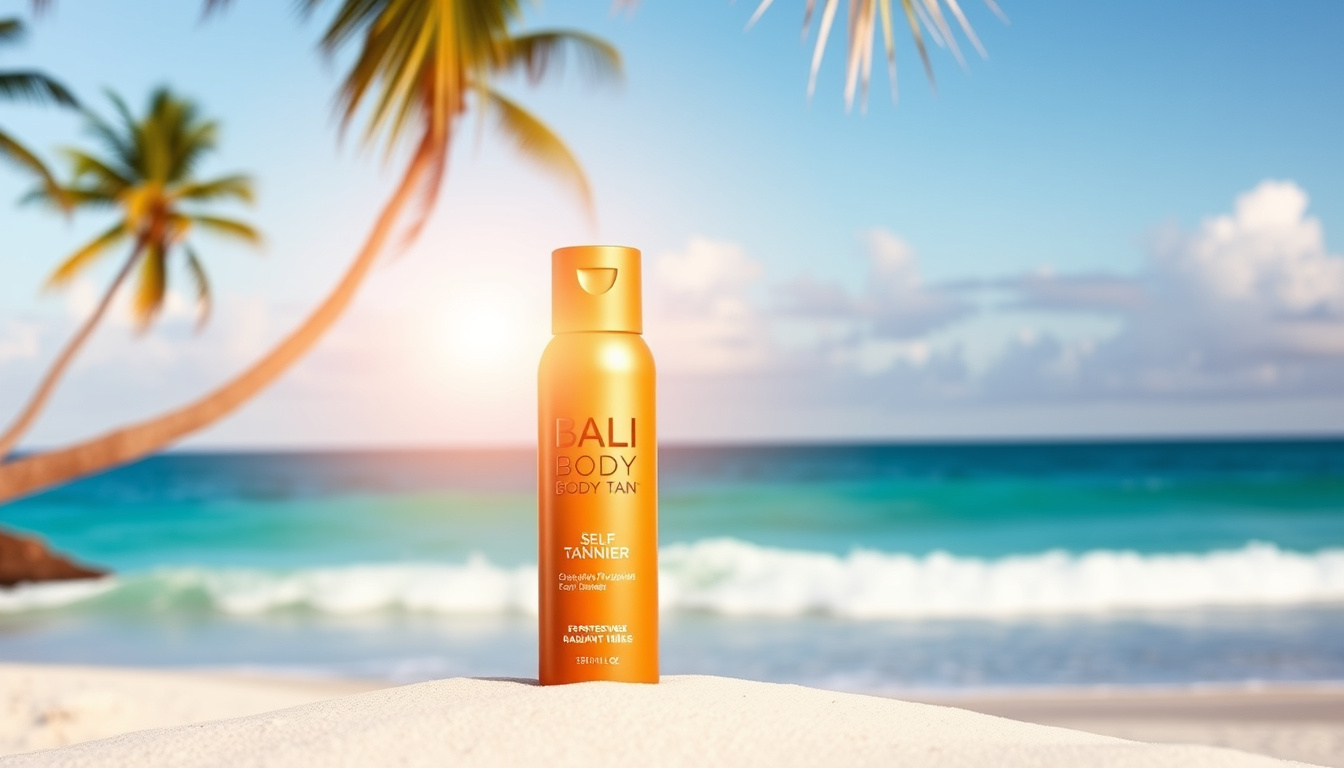
If you’ve scrolled through any Australian skincare community, chances are Bali Body has crossed your feed. The brand’s Self Tanning Mousse sits in that rare middle ground — popular enough to have spawned a dozen knockoffs, yet confusing enough that most buyers still aren’t sure how long the tan actually lasts or whether it’s safe during pregnancy. This guide cuts through both gaps, using official product pages, independent reviews, and one conflicting safety list to give you a realistic picture before you apply anything.
Product Origin: Australian made · Key Formats: Self Tanning Mousse, Milk, Oil, Gel · Popular Size: 200ml · Vegan Friendly: Yes · Shades Available: Dark, Ultra Dark, Clear
Quick snapshot
- Australian made, vegan-friendly formula (Bali Body UK)
- 6–8 full-body applications per bottle (Bali Body UK)
- Priced at $29.95 for 6.7 oz (SelfTanning.com)
- Pregnancy safety divides official claims from third-party lists
- Real-world longevity varies from 3–4 days to 5–7 days depending on skin and hydration
- Limited independent lab data on DHA absorption rates
- Bali Body launched pregnancy-specific messaging as early as 2018 (Sivan Ayla)
- 15 Minute Beauty updated its pregnancy-safe list as of 2025-02-22 (15 Minute Beauty Fanatic)
- Brand continues expanding retail partnerships (Boots, Target, Ulta Beauty)
- Clear-formula variants may reduce fabric-staining risk
- Pregnancy safety debate likely to persist until a formal regulatory ruling
Six product variables matter most when evaluating Bali Body tan — brand origin, key formulation, retail availability, vegan status, shipping threshold, and shade depth.
| Field | Detail |
|---|---|
| Brand Origin | Australia |
| Key Product | Self Tanning Mousse Dark |
| Retailers | Boots, Target, Ulta Beauty |
| Vegan Status | Friendly |
| Shipping | Free over $40 on official site |
How long does Bali Body tan last?
Bali Body’s official FAQ states that the Self Tanning Mousse lasts on average 5–7 days, with longevity extended through regular moisturizing (Bali Body UK). That tracks with general self-tanner industry benchmarks — Coco & Eve notes that most foam tanners hold for 3 days to a week with proper hydration care (Coco & Eve Blog).
Factors affecting duration
- Skin type and cell turnover: Faster cell turnover means faster fade. Dry or thicker skin tends to hold color longer.
- Hydration level: Applying moisturizer daily significantly extends wear time, according to Bali Body’s own usage guide.
- Application amount: A single 200ml bottle yields 6–8 full-body applications — going lighter on each coat may reduce longevity per session.
- Water exposure: Chlorine and prolonged swimming accelerate breakdown of DHA-bonded melanin on the skin surface.
Application tips for longevity
- Exfoliate 24 hours before applying to create an even canvas.
- Allow the mousse to dry fully (2–5 minutes) before dressing.
- Reapply Face Tan Mist every 2–3 days to maintain depth on facial areas (Bali Body UK).
- Moisturize daily, but avoid oil-heavy products directly on the tan in the first 24 hours.
How good is Bali Body tan?
User reviews paint a split picture. One verified Walmart reviewer described the result as “natural-looking tan without streaks or orange, smooth application, natural brown color” (Walmart Reviews). On the brand’s own US site, a customer wrote: “It doesn’t streak and gives an effortless, dark, yet natural looking tan” (Bali Body US).
SelfTanning.com’s detailed review offers a more measured view: “My tan only lasted 3–4 days before it looked like a light tan. It also looks super patchy and dry as it fades” (SelfTanning.com). The mousse can stain fabrics if not allowed to dry completely before contact with clothing or bedding.
Pros and cons
Upsides
- Dark shade produces a natural brown tone without orange drift
- 6–8 applications per 200ml bottle offers solid value at $29.95
- Vegan-friendly, Australian-made formula
- Fast-drying mousse format avoids sticky wait times
- Available in multiple formats: mousse, milk, oil, gel
Downsides
- Fading can appear patchy and dry on some skin types
- Fabric staining risk during application
- Real-world longevity (3–4 days) falls short of official 5–7 day claim
- DHA-based products raise pregnancy safety questions
- Does not provide UV protection — SPF still required separately
Comparisons to expectations
The brand markets the result as “flawless looking tan,” and for initial application, customer reviews largely confirm that promise. The gap appears in the fade phase — where many self-tanners struggle, Bali Body included. The key variable is maintenance: moisturizing daily is the difference between hitting 5 days and watching the tan vanish by day 3.
Bali Body products do not protect from UV rays. Whatever your tan routine, layer SPF on top — a self-tanner replaces color, not sun protection.
Can you sleep with Bali Body on?
Bali Body’s Dark Self Tanning Mousse develops a light tan in 1–3 hours, medium in 3–6 hours, and dark in 6–8 hours or overnight (Bali Body UK). The fast-drying formula (ready in 2–5 minutes) means you can dress shortly after application, but the brand’s own instructions acknowledge that sleeping in the product is a viable development method if you prefer.
Drying time
- Touch-dry: 2–5 minutes for most skin types in room-temperature conditions.
- Shower-safe: Water exposure before the full development window can wash out developing DHA bonds, reducing final depth.
- Fabric contact: Allow the mousse to fully dry before contact with sheets, towels, or clothing to prevent transfer staining.
Overnight wear advice
If you choose to sleep in the tan, apply at least 6–8 hours before your morning shower. Wear old pajamas you don’t mind potentially ruining, and avoid tight clothing that causes friction against the drying tan. For the deepest result, Bali Body suggests leaving the mousse on overnight — a common practice among self-tanner users who want maximum color development before rinsing.
Sleeping in the mousse works, but only if you accept a small risk: even fully dry formulas can shift in your sleep, creating minor unevenness on high-friction areas like elbows and knees. Touch-up application the next day is common.
Can you wear fake tan if you are pregnant?
This question exposes the clearest fault line in Bali Body’s public record. The brand’s Australian blog states that the Self Tanning Mousse uses “100% natural DHA, making it the safest option for pregnant BB babes” (Bali Body AU). The UK FAQ goes further: “Generally speaking, all self tan products are safe to use during pregnancy and breastfeeding” — with a caution to avoid the breast area while lactating (Bali Body UK).
However, 15 Minute Beauty Fanatic — an independent pregnancy beauty analyst — flags the Self Tanning Mousse as not safe for pregnancy on its 2025-02-22 updated list, specifically citing DHA content as the reason (15 Minute Beauty Fanatic). The same source lists Bali Body’s Instant Tan Mousse as pregnancy and nursing safe, suggesting formulation differences matter.
Safety considerations
- DHA inhalation risk: Bali Body AU specifically recommends lotion or mousse over sprays during pregnancy to avoid DHA inhalation (Bali Body AU).
- Patch testing advised: The brand recommends a patch test for sensitive skin or pregnancy due to hormonal changes affecting skin reactivity (Bali Body UK).
- Conflicting guidance: Official brand claims and independent third-party lists currently disagree on DHA-based mousse safety during pregnancy.
Alternatives
- Instant Tan Mousse: Listed as pregnancy-safe by 15 Minute Beauty, though not confirmed by Bali Body’s own FAQs (15 Minute Beauty Fanatic).
- Bronzing Lotion: A temporary wash-off formula that produces immediate color without DHA development — safer for the cautious trimester (Sivan Ayla).
- Non-DHA alternatives: Products relying solely on bronzers (cosmetic pigments) offer color without any DHA absorption concerns.
Will fake tan cover vitiligo?
Self-tanner works by bonding with dead skin cells on the surface to produce a temporary brown tone. For vitiligo — areas of skin that have lost melanin — this means the tanner will develop color on the unaffected surrounding skin but typically lighter on the depigmented patches, creating contrast rather than uniform coverage. The result depends on how much surrounding skin is available to absorb DHA and how large the vitiligo patches are.
Coverage effectiveness
For small, scattered patches, self-tanner can reduce the visual contrast enough that many wearers feel satisfied with the appearance. For large or widespread vitiligo, the difference between tanned and untanned skin may become more noticeable rather than less.
Skin camouflage options
- Self-tanner: Works best on localized vitiligo where surrounding skin provides a strong color base. Reapply every 3–7 days to maintain evenness.
- Dermatological concealers: Products designed for skin conditions offer buildable, waterproof coverage but require daily application and removal.
- UV or topical treatments: Repigmentation therapies address the underlying cause but require medical supervision and months of commitment.
Bali Body notes that its products are safe for eczema with a patch test (Bali Body UK), though vitiligo-specific safety data is not published. Anyone with a skin condition affecting pigmentation should patch-test before full-body application.
Self-tanner is not a medical treatment — it’s a cosmetic. For vitiligo coverage, the gap between expectation and reality is significant: the product works on what color your skin still has, not on what it’s lost. Bali Body’s products are dermatologically noted as eczema-friendly with a patch test, but vitiligo-specific results will vary by individual.
How to Apply Bali Body Self Tanning Mousse
A step-by-step application process that aligns with Bali Body’s official guidance and user review feedback to maximize evenness and longevity.
- Exfoliate 24 hours before: Remove dead skin cells with a gentle scrub or exfoliating mitt. Bali Body recommends its own Self Tan Remover and Exfoliating Mitt for this step (Bali Body UK). Do not exfoliate on the same day as application — this can cause uneven absorption.
- Moisturize dry areas: Apply a light moisturizer to elbows, knees, ankles, and wrists before the mousse. These areas absorb DHA faster and can appear darker without barrier prep.
- Apply in sections: Use circular motions to blend the mousse evenly. Work in small sections (legs, arms, torso) rather than applying all at once.
- Allow 2–5 minutes to dry: Keep arms and legs away from clothing. Do not dress until the mousse no longer feels tacky to the touch.
- Develop for 1–8 hours: Light tan: 1–3 hours. Medium tan: 3–6 hours. Dark tan: 6–8 hours or overnight. Shower only after the full development window.
- Rinse and assess: Rinse with lukewarm water only — no soap in the first shower post-application. Pat dry and apply moisturizer.
- Maintain with mist: Reapply Bali Body Face Tan Mist every 2–3 days to maintain facial tan depth. Body moisturizing daily extends overall wear.
| Specification | Detail |
|---|---|
| Active Ingredient | 100% Natural DHA |
| Bottle Size (US retail) | 6.7 oz / 200ml |
| Applications per Bottle | 6–8 full-body applications |
| Development Time (Dark shade) | 6–8 hours or overnight |
| Official Longevity Claim | 5–7 days average |
| Independent Review Duration | 3–4 days before patchiness |
| Price (US) | $29.95 ($4.47 per oz) |
| Formulas Available | Mousse, Milk, Oil, Gel |
| Shade Options | Dark, Ultra Dark, Clear |
| Pregnancy Safety | Contested — brand claims safe; third-party list flags DHA mousse |
| UV Protection | None — SPF required separately |
| Fabric Staining Risk | Yes, if not fully dry before contact |
Related reading: Bare Minerals Complexion Rescue review · HiSmile Whitening Strips review
While Bali Body delivers full-body results, Tan Luxe face drops let users customize facial glow with easy drop integration into daily routines.
Frequently asked questions
Does fake tan make pigmentation worse?
No established evidence shows that self-tanner worsens pigmentation disorders like hyperpigmentation or melasma. DHA acts only on the skin surface and does not penetrate deep enough to stimulate melanin production. However, sun exposure without SPF — which some fake tan users may mistakenly skip — can worsen pigmentation. Bali Body notes its products do not provide UV protection (Bali Body UK).
What is 10 minutes in a sunbed equivalent to?
A 10-minute sunbed session can emit UV radiation equivalent to several hours of midday sun, depending on the machine’s intensity rating. This has no connection to self-tanning products — Bali Body’s DHA-based mousse produces a cosmetic tan through a surface reaction, not UV stimulation. Using a sunbed without protection significantly increases skin cancer risk.
Can B12 reverse vitiligo?
Vitamin B12 deficiency has been linked to some cases of vitiligo in research settings, and supplementation has shown modest repigmentation results in small studies. However, B12 is not a standard or guaranteed treatment for vitiligo, and no Bali Body product contains B12 or makes any therapeutic claim related to skin repigmentation.
Does self-tanner help to conceal brown spots?
Self-tanner can reduce the contrast of hyperpigmented spots like sun spots or age spots by darkening the surrounding skin. The effect is cosmetic and temporary — the spots remain but appear less prominent. Results vary by spot size, color depth, and skin tone.
What does Jennifer Aniston use for tanning?
Jennifer Aniston has publicly mentioned her preference for sunless tanners in interviews, though she has not specifically endorsed or used Bali Body products. The actress has cited St. Tropez and other salon-grade self-tanners as part of her skincare routine in various publications.
How long should I leave my Bali Body tan on?
Bali Body’s development guide is tiered: light tan develops in 1–3 hours, medium in 3–6 hours, and dark in 6–8 hours or overnight. For a first-time application targeting the Dark shade, overnight development is the most reliable approach. Shower only after the chosen window has elapsed (Bali Body UK).
Is Bali Body tan suitable for sensitive skin?
Bali Body notes that its products are safe for eczema with a patch test, and recommends the same approach for sensitive skin generally (Bali Body UK). The 100% natural DHA formulation avoids many synthetic additives found in competitor products, which may reduce irritation risk. However, hormonal changes during pregnancy or menstruation can alter skin reactivity, making a 24-hour patch test the standard advice.
What users and the brand say
Our Self Tanning Mousse is made of 100% natural DHA, making it the safest option for pregnant BB babes.
— Bali Body (Brand Official, Bali Body AU Blog)
My tan only lasted 3–4 days before it looked like a light tan. It also looks super patchy and dry as it fades.
— Reviewer (SelfTanning.com, SelfTanning.com)
It doesn’t streak and gives an effortless, dark, yet natural looking tan.
— Customer (Bali Body US Reviews, Bali Body US)
Bali Body sits comfortably in the mid-tier of the self-tanning market — above drugstore offerings in formulation quality, below luxury brands in price point. The brand scores well on natural-looking color and ease of application, but longevity is where real-world experience diverges most from official marketing. For everyday wear, 3–4 days is the realistic baseline. For events or trips where you want a full week of color, plan for touch-ups and diligent moisturizing.

Grace Clarke leads fact-checking, source verification and corrections at Aussie Brief.