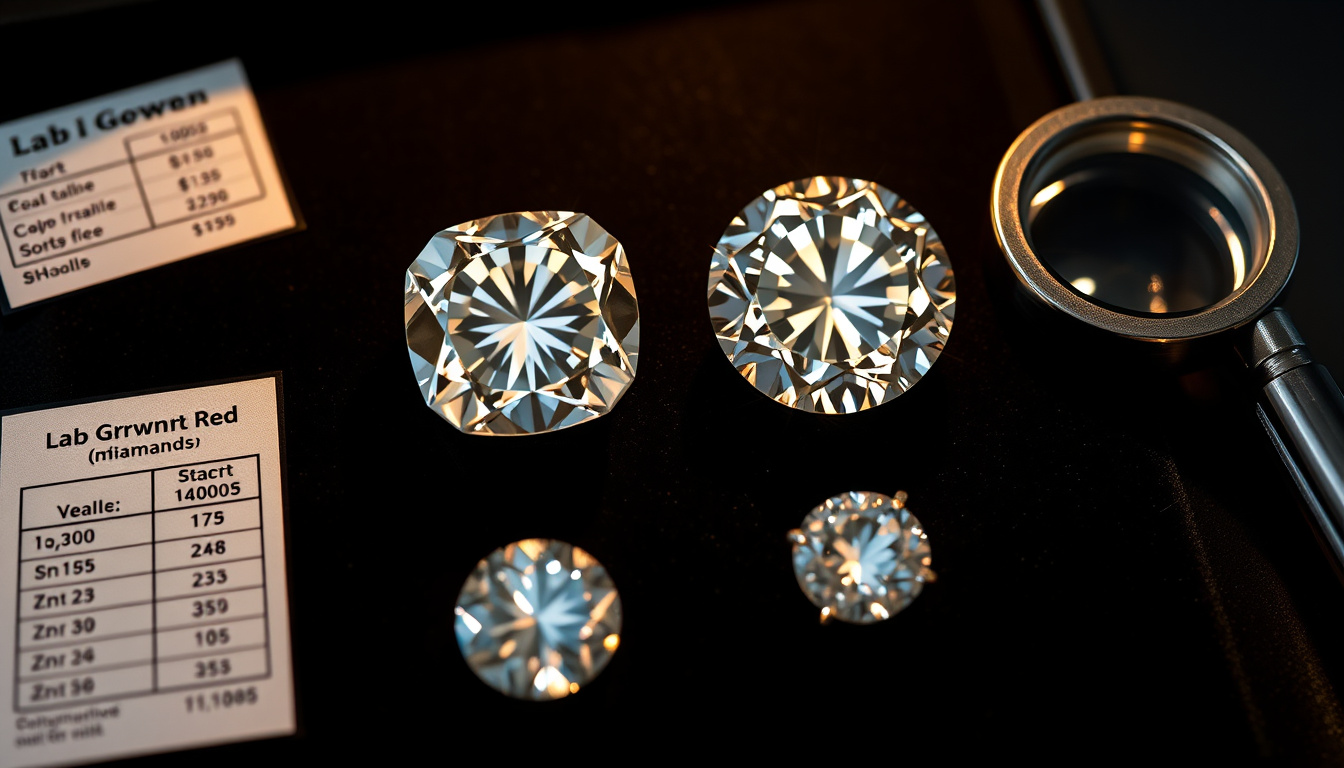

Lab grown diamonds have transformed the jewellery industry, offering consumers an alternative to mined stones that matches natural diamonds in almost every measurable way. These man-made gems share the same chemical, physical, and optical properties as their earth-formed counterparts, yet they emerge from laboratories in weeks rather than geological timescales spanning billions of years. As prices for natural diamonds continue climbing amid supply constraints, lab grown alternatives have carved out a significant and growing presence in the market.
The technology behind synthetic diamond production matured significantly over the past two decades, making jewellery-quality stones widely accessible for the first time. Major certification bodies now grade lab grown diamonds using the same rigorous standards applied to natural stones, providing buyers with confidence in their purchases. Understanding the nuances between lab created and mined diamonds helps consumers make informed decisions based on their priorities, whether those centre on budget, ethics, or long-term value retention.
What Are Lab Grown Diamonds?
Lab grown diamonds—also referred to as lab-created, synthetic, CVD, HPHT, or man-made diamonds—are produced through controlled technological processes that replicate the conditions under which natural diamonds form deep within Earth’s mantle. The Federal Trade Commission officially recognised these stones as genuine diamonds in 2018, eliminating the outdated “synthetic” classification that had lingered since earlier iterations of the technology. Today, leading gemological institutes including the Gemological Institute of America grade lab grown diamonds using identical criteria to natural stones, providing certified documentation of their quality.
Real diamonds with identical chemical structure to mined stones
HPHT and CVD processes produce gem-quality crystals
30-50% lower cost, conflict-free sourcing, ethical production
Significant resale value depreciation compared to natural stones
How Are Lab Grown Diamonds Made?
Two primary methods dominate commercial diamond synthesis: High Pressure High Temperature and Chemical Vapor Deposition. The HPHT process subjects carbon to extreme pressure reaching approximately 870,000 psi while maintaining temperatures around 2,700°F, conditions that mirror the deep earth environment where natural diamonds crystallise over millennia. This method typically produces diamonds over several weeks, though modern iterations have accelerated the timeline considerably.
CVD diamond growth takes a different approach, depositing carbon atoms layer-by-layer from a hydrocarbon gas mixture onto a diamond seed within a specialised vacuum chamber. According to research published by Nathan Alan Jewelers, this process also spans several weeks and yields high-purity stones that gemologists can distinguish from natural diamonds only through careful examination under magnification. Both methods produce jewellery-quality diamonds available in various shapes, sizes, and colours, cut and polished using identical techniques to their mined counterparts.
Are Lab Grown Diamonds Real?
The question of authenticity concerns many first-time buyers, and the answer rests on a clear scientific foundation. Lab grown diamonds possess the same crystal structure, refractive index, and hardness as natural diamonds—they rank 10 on the Mohs hardness scale and display identical sparkle, fire, and scintillation to the unaided eye. The GIA has certified lab grown diamonds since 2007 using the same 4Cs framework applied to natural stones: cut, colour, clarity, and carat weight.
Trained gemologists can identify lab grown diamonds through distinctive growth patterns, metallic inclusions from the manufacturing process, or the absence of nitrogen traces commonly present in natural stones. All certified lab grown diamonds carry laser inscriptions on their girdles identifying their laboratory origin, ensuring transparency throughout the supply chain. This distinction matters primarily for valuation purposes, as the two categories command significantly different prices in the secondary market.
Lab grown diamonds exhibit identical chemical and optical properties to natural diamonds, scoring 10 on the Mohs hardness scale and displaying the same brilliance. Differences become apparent only under laboratory magnification, where growth patterns and inclusion types reveal their origin.
Lab Grown Diamonds vs Natural Diamonds
The fundamental distinction between lab grown and natural diamonds lies in their origin story rather than their physical characteristics. Natural diamonds form over one to three billion years beneath Earth’s continental plates, crystallising under immense heat and pressure before volcanic eruptions occasionally bring them within reach of mining operations. Lab created alternatives follow the same atomic blueprint but complete their formation within controlled factory environments over weeks to months, according to Brilliant Earth, a retailer specialising in ethically sourced gems.
Visual and Physical Comparison
To the naked eye, distinguishing between lab grown and natural diamonds proves impossible without specialised equipment. Both varieties display equivalent brilliance, fire, and scintillation patterns when properly cut and polished. The Diamond Mansion education resources confirm that even experienced jewellers cannot reliably identify lab grown stones through visual inspection alone. Inclusion patterns and growth structures differ subtly between the two categories, but these variations remain invisible without 10x magnification or stronger laboratory instruments.
Price Comparison
Cost represents the most tangible advantage of lab grown diamonds over natural alternatives. Consumers typically pay 30-50% less for comparable lab created stones, enabling purchases of larger diamonds or higher quality specifications within equivalent budgets. A one-carat natural diamond that might retail for $6,000 could find a lab grown equivalent priced between $3,000 and $4,200, depending on cut, colour, and clarity grades. This pricing differential stems from scalable laboratory production that eliminates mining expenses, geological uncertainty, and the limited supply chain associated with extracting stones from the earth.
| Aspect | Lab Grown Diamonds | Natural Diamonds |
|---|---|---|
| Formation Time | Weeks to months | 1-3 billion years |
| Visual Differences | None visible to naked eye; subtle under magnification | Natural growth patterns |
| Price Point | 30-50% lower than natural | Higher due to rarity |
| Resale Value | Significant depreciation | Better long-term retention |
| Chemical Properties | Identical carbon structure | Identical carbon structure |
| Certification | GIA/IGI grading since 2007 | GIA/IGI grading standard |
Do Lab Grown Diamonds Hold Their Value?
This question represents one of the most critical considerations for prospective buyers weighing their options. Unlike natural diamonds, which derive value partly from their geological rarity, lab grown diamonds face effectively unlimited supply potential from manufacturing facilities capable of producing stones indefinitely. This fundamental economic reality means that resale values for lab created diamonds depreciate significantly after initial purchase, often dropping 50% or more within the first few years according to market analysis from Blue Nile education resources.
Understanding Resale Market Dynamics
The secondary market for lab grown diamonds remains nascent and somewhat volatile compared to the established infrastructure surrounding natural diamond resale. Pawn shops, online resale platforms, and jewellery stores consistently offer substantially lower prices for pre-owned lab created stones, reflecting both the abundance of available inventory and the absence of the scarcity premium that supports natural diamond values. Jewelers surveyed by Kay Jewelers education materials note that lab grown diamond resale typically yields 30-60% of original retail price, compared to natural stones that might retain 50-75% depending on quality and market conditions.
Investment Considerations
Financial advisors generally recommend viewing diamond purchases as emotional acquisitions rather than investment vehicles, whether the stones originate from laboratories or mines. Natural diamonds do maintain better resale values due to finite supply constraints, but transaction costs, dealer margins, and market timing significantly impact actual returns for individual sellers. Lab grown diamonds prioritise immediate affordability and aesthetic satisfaction over long-term financial preservation, a trade-off that appeals to many consumers prioritising budget and ethical considerations.
Lab grown diamond prices have trended downward as manufacturing capacity expanded, whereas natural diamond prices have remained relatively stable or increased due to geological scarcity. No specific 2025 pricing forecasts appear in current market data, though industry analysts suggest continued affordability for lab created stones versus rarity-driven natural pricing.
How to Buy Lab Grown Diamonds
Purchasing a lab grown diamond requires the same careful evaluation process applicable to natural stone acquisitions, with additional attention to certification documentation and retailer reputation. The Gemological Institute of America has graded lab grown diamonds since 2007, and their reports now specify origin explicitly following terminology updates in 2019. Seeking stones accompanied by GIA or IGI certification provides independent verification of the 4Cs specifications and confirms laboratory origin through girdle inscriptions visible under magnification.
Ethical Considerations
Many buyers gravitate toward lab grown diamonds specifically for ethical reasons, and the distinction carries genuine weight. Traditional mining operations raise legitimate concerns about environmental degradation, land disruption, water usage, and labour conditions in certain regions. Lab created diamonds sidestep these issues entirely through controlled manufacturing environments with fully traceable supply chains. Natural diamond producers counter with the Kimberley Process certification scheme and emerging blockchain tracking technologies that verify conflict-free sourcing, though critics argue these measures have limitations in practice. Brilliant Earth offers additional guidance on navigating these ethical considerations when making purchasing decisions.
Certification and Verification
Reputable retailers provide grading reports from recognised laboratories alongside physical verification of girdle inscriptions linking stones to their documentation. Comparing 4Cs specifications across multiple stones helps buyers identify optimal value within their budgets, recognising that colour and clarity grades represent subjective assessments with acceptable tolerance ranges. Beyond certification, experienced buyers examine cut quality carefully since proportions and symmetry significantly impact brilliance despite identical grade labels on certification documents.
Always verify certification documentation before completing purchases. GIA reports for lab grown diamonds include specific language indicating laboratory origin, distinguishing them from natural diamond certificates. Reputable sellers will welcome questions about stone provenance and provide documentation willingly.
For those exploring complementary technology purchases alongside diamond acquisitions, iPhone 16 – Specs, Prices, Features and Comparisons provides comprehensive guidance on current smartphone options that integrate seamlessly with jewellery photography and comparison tools.
The Evolution of Lab Grown Diamond Technology
Scientific attempts to synthesise diamonds date to the 1950s, though early efforts produced only industrial-grade materials unsuitable for jewellery applications. According to historical records compiled by Diamond Mansion research, jewellery-quality production became viable during the 2000s as HPHT and CVD technologies matured sufficiently to create gem-worthy crystals. The intervening decades saw gradual improvements in size, colour consistency, and clarity that transformed laboratory curiosities into commercially viable alternatives.
- 1950s: Initial diamond synthesis experiments produce industrial-quality stones for cutting and grinding applications
- 2000s: HPHT and CVD technologies advance to jewellery-quality production standards
- 2007: GIA begins formal grading programs for laboratory-grown diamonds
- 2018: FTC formally recognises lab grown diamonds as genuine diamonds, eliminating “synthetic” terminology
- 2019: GIA updates certification terminology to specify “laboratory-grown” origin clearly
- 2020s: Market expansion driven by affordability, ethical considerations, and improved consumer awareness
Market growth has accelerated throughout the 2020s as production costs declined and consumer familiarity increased. While specific 2025 market share data remains limited in publicly available research, industry trends consistently favour lab grown diamonds for buyers prioritising accessibility and value. The technology continues evolving, with manufacturers achieving larger sizes, rarer colours, and higher clarities that previously required exceptional natural stone finds.
What We Know and What Remains Uncertain
Honest assessment requires distinguishing established facts from areas where uncertainty persists or additional information would benefit prospective buyers. The scientific community has thoroughly documented the chemical and physical equivalence between lab grown and natural diamonds, providing solid foundation for purchasing decisions based on objective characteristics.
| Established Information | Areas of Uncertainty |
|---|---|
| Identical chemical structure and crystal lattice to natural diamonds | Long-term resale value projections remain speculative |
| FTC recognition as genuine diamonds since 2018 | Future pricing trajectory depends on production capacity and demand |
| GIA/IGI certification using identical 4Cs grading standards | Environmental impact of laboratory energy consumption compared to mining |
| 30-50% cost savings over comparable natural stones | Consumer perception shifts that might affect market acceptance over time |
| HPHT and CVD production methods thoroughly documented | Regulatory frameworks continue developing across different jurisdictions |
Gemologists confirm authenticity through rigorous examination protocols, though expert views noted in industry publications emphasise that identification without specialised tools remains impossible for the average consumer. Jewelers consistently report price and ethics as the primary factors motivating lab grown diamond purchases, suggesting these considerations outweigh concerns about long-term value retention for most buyers.
Industry Context and Market Position
Lab grown diamonds occupy a distinct market position that continues evolving as technology advances and consumer awareness spreads. The technology emerged from scientific laboratories before commercial adoption created a new retail category, transforming what began as a gemological novelty into a significant industry segment. Major retailers now maintain substantial inventory of lab created stones alongside traditional offerings, acknowledging that both categories serve different consumer priorities.
The Australian jewellery market has embraced lab grown alternatives as part of broader trends toward ethical consumption. Harli and Harpa – Australian Waterproof Jewellery Overview illustrates how domestic producers incorporate lab grown diamonds into collections emphasising durability and ethical sourcing. This positioning reflects broader market dynamics where environmental and labour concerns increasingly influence purchasing decisions across jewellery categories.
Authoritative Sources and Expert Guidance
Several organisations provide authoritative information on lab grown diamond quality, certification, and market dynamics. The Gemological Institute of America offers comprehensive educational resources explaining grading standards and verification procedures. Federal trade guidelines, including FTC advertising guides for jewellers, establish the regulatory framework distinguishing legitimate representations from deceptive practices.
“Laboratory-grown diamonds have the same optical, physical, and chemical properties as natural diamonds and are essentially indistinguishable without specialised equipment. The Federal Trade Commission recognises them as diamonds of the same species.”
— Federal Trade Commission, Jewellers Advertising Guides
“GIA has been grading laboratory-grown diamonds since 2007 using the same 4Cs and grading scales applied to natural diamonds. Starting in 2019, GIA reports include clear disclosure of the diamond’s laboratory origin.”
— Gemological Institute of America, Lab Grown Diamond Information
Making an Informed Decision
Choosing between lab grown and natural diamonds ultimately depends on individual priorities, budget constraints, and personal values. Lab grown diamonds deliver genuine diamonds at accessible price points while eliminating concerns about conflict sourcing and environmental impact of mining operations. Natural diamonds offer the reassurance of geological rarity and better value retention in secondary markets, though at considerably higher initial cost. Understanding these trade-offs enables consumers to select options aligned with their specific circumstances and preferences.
Regardless of origin, all diamond purchases benefit from careful verification of certification, comparison shopping across multiple retailers, and realistic expectations about long-term value. The Natural Diamond Council resources provide additional context for consumers researching both categories, offering balanced perspectives from industry stakeholders representing traditional mining interests alongside the emerging lab grown segment.
Frequently Asked Questions
Are lab grown diamonds ethical?
Lab grown diamonds avoid the environmental damage, land disruption, and labour concerns associated with traditional mining. They offer fully traceable supply chains with minimal ecological footprint compared to earth-mined alternatives.
What certification should I look for when buying lab grown diamonds?
Seek GIA or IGI certification confirming the 4Cs specifications and explicitly stating laboratory origin. Reports dated after 2019 include clear disclosure of the stone’s growth method and certified origin.
How long do lab grown diamonds last?
Lab grown diamonds possess identical durability to natural stones, scoring 10 on the Mohs hardness scale. They resist scratching and maintain structural integrity indefinitely under normal wear conditions.
Can you tell the difference between lab grown and natural diamonds?
No visible differences exist to the unaided eye. Gemologists require 10x magnification or stronger equipment to identify growth patterns, metallic inclusions, or absence of nitrogen traces characteristic of each category.
Do lab grown diamonds come in different colours?
Yes, lab grown diamonds are available in the same colour range as natural stones, from colourless to near-colourless and fancy colours including blue, pink, yellow, and green. HPHT and CVD methods can produce various hues depending on treatment processes.
Are lab grown diamonds cheaper than natural diamonds?
Lab grown diamonds typically cost 30-50% less than comparable natural stones, enabling purchases of larger diamonds or higher quality specifications within equivalent budgets.
Do lab grown diamonds have inclusions?
Lab grown diamonds can contain inclusions just like natural stones. Despite marketing suggesting otherwise, no diamond is truly flawless. HPHT and CVD processes may produce metallic inclusions or unique growth patterns visible under magnification.

Grace Clarke leads fact-checking, source verification and corrections at Aussie Brief.