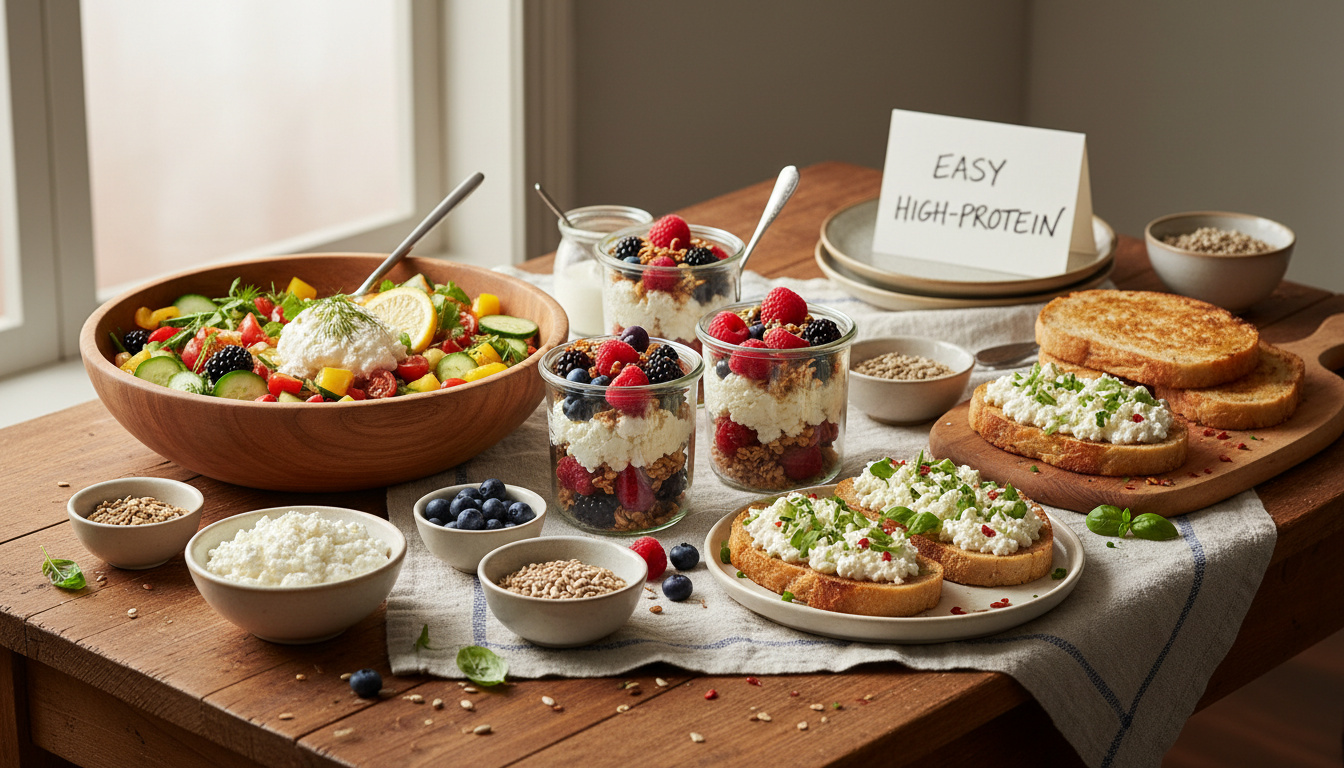
Cottage cheese has shed its reputation as a bland diet food to become a foundational ingredient in modern high-protein cooking. With approximately 11 grams of protein and only 3 to 4 grams of carbohydrates per half-cup serving, this dairy staple now anchors everything from fluffy breakfast pancakes to creamy dessert bars. The slow-release casein protein supports sustained energy and muscle recovery, making it particularly valuable for athletes and those managing weight.
Home kitchens have embraced the ingredient’s versatility. Blending transforms the curds into silky batters for bread and wraps, while folding it into eggs creates rich, creamy textures without added cream. Full-fat varieties provide the best mouthfeel for cooking, delivering healthy fats alongside essential amino acids and calcium.
This guide examines practical applications across breakfast, snacks, and desserts, providing specific nutritional data and preparation timelines for each category. All recipes prioritize minimal ingredients and realistic cooking times, with verified macro calculations for ketogenic and high-protein dietary patterns.
What Are the Best Easy Cottage Cheese Recipes?
The most reliable cottage cheese recipes share common traits: they require five or fewer ingredients, complete in under thirty minutes, and deliver at least 10 grams of protein per serving. These parameters narrow the field to specific categories that maximize the ingredient’s textural benefits while minimizing preparation complexity.
Quick Snacks
No-cook combinations like tuna salad bowls and mustard dips utilizing the curds as a protein-rich base.
Breakfast Boosters
Blended pancakes, vegetable frittatas, and scrambled egg bowls delivering 20+ grams protein.
Sweet Treats
Flourless brownies, mini cheesecakes, and blended cookies with under 5g net carbs per serving.
Savory Mains
Protein bakes with eggs and cheese, Ethiopian-spiced collard greens, and stuffed vegetable dishes.
Key characteristics define successful preparations:
- Half-cup servings provide 11 grams of slow-digesting casein protein
- Net carbohydrate content remains between 3 and 4 grams per serving for full-fat varieties
- Blending eliminates curd texture for smooth batters and dessert bases
- Calcium content supports bone health alongside protein intake
- Cost per serving remains significantly lower than Greek yogurt or protein powders
- Lactose content varies by brand, with some offering lactose-free options
- Heat stability allows baking up to 375°F without protein degradation
| Nutrient | Per 100g Full-Fat | Per 100g Low-Fat | Practical Application |
|---|---|---|---|
| Protein | 11-12g | 10-11g | Supports muscle protein synthesis |
| Total Carbs | 3-4g | 4-5g | Fits ketogenic macros |
| Fat | 4-5g | 1-2g | Affects recipe texture |
| Calcium | 83mg | 86mg | Bioavailable mineral source |
| Calories | 98-110 | 72-80 | Energy density control |
| Casein Content | 80% of protein | 80% of protein | Sustained amino acid release |
| Storage (Opened) | 5-7 days | 5-7 days | Refrigerate at 40°F or below |
| Best Culinary Use | Baking, desserts | Dips, cold applications | Full-fat prevents dryness |
Is Cottage Cheese Healthy and What Are High-Protein Recipes?
Nutritional assessments confirm cottage cheese delivers complete protein containing all nine essential amino acids. The casein structure digests slowly, creating prolonged satiety compared to whey-based alternatives. This characteristic proves particularly beneficial for weight management protocols and overnight muscle recovery.
Full-fat cottage cheese provides superior texture in heated applications and maintains ketogenic compliance with 3-4 grams of carbohydrates per serving. Low-fat versions work adequately for cold dips but may separate or become rubbery when baked.
Nutritional Benefits
Research indicates the protein bioavailability matches that of eggs and lean meats. Each half-cup serving contributes roughly 11 grams of protein alongside 83 milligrams of calcium. The carbohydrate content remains minimal at 4.1 grams, fitting Mediterranean, ketogenic, and high-protein dietary frameworks. High Protein Recipes Using Cottage Cheese consistently demonstrate these macros support appetite control through hormonal responses to casein digestion.
High-Protein Snack Ideas
The two-ingredient bread recipe demonstrates the ingredient’s structural potential. Combining three tablespoons of full-fat cottage cheese with three eggs creates a batter that bakes into flatbread or bagel substitutes containing 23 calories and 2.3 grams of protein per slice with only 0.3 grams net carbs. Detailed measurements show this preparation takes under twenty minutes.
Savory options include the tuna salad bowl, mixing half a cup of cottage cheese with canned tuna, hard-boiled eggs, cucumber, and capers. This combination yields approximately 30 grams of protein with minimal carbohydrate impact. Visual preparation guides indicate the assembly requires five minutes.
Cottage Cheese Breakfast Ideas and Pancake Recipes
Morning applications exploit the ingredient’s ability to create fluffy textures without flour. When blended, the curds incorporate air and bind with alternative flours to produce batters that cook evenly and deliver sustained energy.
Pancakes and Overnight Oats
Keto cottage cheese pancakes utilize blended curds combined with almond or coconut flour to create gluten-free alternatives. The batter produces cakes with fewer than 5 grams net carbs per serving while maintaining traditional pancake texture. Keto Cottage Cheese Recipes demonstrate variations incorporating vanilla or cinnamon for flavor diversity without sugar.
The cottage cheese scrambled egg bowl offers a higher-fat alternative. Whisking half a cup of full-fat cottage cheese with three eggs, half an avocado, and salsa creates a 442-calorie meal containing 34 grams of protein and 6 grams net carbohydrates. Preparation completes in approximately ten minutes over medium heat.
Toast Variations
For savory preferences, the cottage cheese omelet folds the curds into beaten eggs with vegetables, creating a creamy interior texture. This preparation yields roughly 4 grams of carbohydrates and high protein content, suitable for gluten-free diets. Frittata variations incorporate the cheese into egg-based casseroles baked with vegetables, portioning into approximately 4 grams net carbs per serving.
Sweet and Dessert Recipes with Cottage Cheese
Dessert applications neutralize the savory tang through blending and the addition of alternative sweeteners. The protein content transforms treats into recovery-friendly snacks suitable for post-workout consumption.
Dessert recipes require blending the cottage cheese until completely smooth to eliminate curd separation. Adding cream cheese or sour cream in small quantities improves mouthfeel in no-bake applications.
No-Bake Cheesecake
The mini keto cottage cheese cheesecake requires six ingredients: one cup cottage cheese, cream cheese, sour cream, eggs, monk fruit sweetener, and salt. Baked at moderate temperature for thirty minutes, individual portions contain 161 calories, 10 grams protein, and 3 grams carbohydrates. Complete baking instructions specify cooling completely before slicing to prevent crumbling.
Brownies and Cookies
Flourless brownies combine blended cottage cheese with protein powder and cocoa to create fudgy textures without wheat flour. Cookie variations bake into soft, chewy forms suitable for high-protein snack packs. Both preparations maintain ketogenic macronutrient profiles when using sugar-free sweeteners.
Baked cottage cheese goods require refrigeration within two hours of cooling. Store in airtight containers for up to three days, or freeze individually wrapped portions for longer preservation. Always cool completely before slicing to maintain structural integrity.
How Quickly Can You Prepare Cottage Cheese Recipes?
Preparation timelines vary by technique, with no-cook options completing in minutes while baked goods require oven time. Understanding these intervals helps integrate the ingredient into busy schedules.
- Immediate (0-5 minutes): Mustard cottage cheese dip blended with hard-boiled eggs, or tuna salad bowls with raw vegetables.
- Quick (5-10 minutes): Scrambled egg bowls and omelets cooked over medium heat with minimal stirring.
- Moderate (15-20 minutes): Pancake griddle cooking and two-ingredient bread baking at 350°F.
- Extended (30-45 minutes): Mini cheesecakes and meat-lovers protein bakes requiring oven temperatures of 375°F.
- Make-ahead: Storage guidelines indicate refrigerated preparations maintain quality for three days, while frozen items last one month.
What Do We Know for Certain About Cottage Cheese Nutrition?
Verifiable nutritional data supports specific claims about this dairy product, while other aspects remain subject to individual variability. This distinction matters for dietary planning and medical applications.
Established Facts
- Casein protein content constitutes approximately 80% of total protein
- Calcium bioavailability matches other dairy products at roughly 30% absorption
- Carbohydrate content ranges 3-4g per half-cup in full-fat varieties
- Heat stability confirmed up to 375°F baking temperatures
- Sodium content varies significantly by brand (300-900mg per cup)
Uncertain Variables
- Individual lactose tolerance thresholds vary widely despite fermentation
- Glycemic index measurements lack standardization across brands
- Optimal timing for post-workout consumption relative to whey remains undefined
- Long-term metabolic impacts of daily casein intake require further study
- Probiotic content varies by manufacturing process and storage conditions
Why Has Cottage Cheese Become a Staple in Modern Diets?
The resurgence tracks directly with macro-focused eating patterns popularized over the past decade. Ketogenic and high-protein dietary frameworks require ingredients delivering maximum protein with minimal carbohydrate contamination. Cottage cheese satisfies this niche at approximately one-third the cost of specialty protein powders or prepared shakes.
Social media platforms accelerated adoption through viral recipes demonstrating the two-ingredient bread and blended dessert hacks. These preparations require minimal culinary skill while producing photogenic results that align with wellness influencer content strategies. The ingredient’s availability in conventional supermarkets eliminates the specialty store requirements of alternative proteins.
Nutritional science supports the trend through verified satiety indices. The casein protein structure triggers prolonged cholecystokinin release compared to carbohydrate-heavy breakfasts, reducing caloric intake at subsequent meals. This mechanism explains the correlation between cottage cheese consumption and weight management outcomes observed in short-term dietary interventions.
Where Does the Evidence Come From?
Nutritional claims regarding protein content and carbohydrate levels derive from USDA FoodData Central and manufacturer testing. Independent recipe developers verify macro calculations through standardized nutritional analysis software, with variations typically within 10% based on specific brand selection.
Cottage cheese provides slow-release casein protein with only 4.1g carbs per serving, making it suitable for keto and high-protein diets while aiding weight loss through satiety and workout recovery.
Nutritional Analysis, Easy Home Meals
Full-fat cottage cheese enhances texture in recipes and fits low-carb goals with 3-4g carbs per serving, while the viral two-ingredient bread delivers 23 calories and 2.3g protein per slice.
Recipe Testing Data, Divalicious Recipes
What Should You Try First?
Begin with the two-ingredient bread to understand the ingredient’s structural properties, then progress to blended pancakes for breakfast applications. For savory preferences, the tuna salad bowl requires no cooking and delivers immediate protein benefits. High Protein Recipes Using Cottage Cheese offer tested starting points that minimize waste while maximizing nutritional return.
Common Questions About Cottage Cheese Recipes
Can you bake with cottage cheese?
Yes. Full-fat varieties withstand oven temperatures up to 375°F without separating. Blending the curds creates smooth batters for cheesecakes, breads, and protein bakes. Low-fat versions may become rubbery when heated.
Which cottage cheese brands work best for cooking?
Full-fat options with 4% milk fat provide optimal texture for heated applications. Look for minimal additive ingredients. Small-curd varieties blend more smoothly than large-curd alternatives for dessert recipes.
Are cottage cheese recipes suitable for weight loss?
Recipes emphasizing the ingredient support weight management through high protein and low carbohydrate content. The casein protein promotes satiety, potentially reducing overall caloric intake when substituted for higher-carb alternatives.
Is cottage cheese keto-friendly?
Full-fat cottage cheese contains 3-4 grams of net carbohydrates per half-cup serving, fitting within standard ketogenic macros. It serves as a primary fat and protein source in many low-carb preparations.
How long do cottage cheese recipes last?
Prepared recipes maintain quality for three days refrigerated in airtight containers. Baked goods freeze well for up to one month when wrapped individually. Always cool completely before storing to prevent condensation.
Can you substitute cottage cheese for ricotta?
Blended cottage cheese substitutes for ricotta in most recipes, particularly lasagna and stuffed shells. The protein content increases while carbohydrate levels decrease compared to traditional ricotta.
Does heating destroy the protein?
Baking and cooking denature the protein structure but do not significantly reduce amino acid bioavailability. The nutritional value remains available for digestion and muscle synthesis after heating.

Grace Clarke leads fact-checking, source verification and corrections at Aussie Brief.