
Bert and Ernie: Iconic Sesame Street Roommates Explained
Bert and Ernie have been staple characters on Sesame Street since the show’s debut in 1969. These two Muppet roommates, living at 123 Sesame Street, have become cultural icons whose friendship and living arrangements have sparked decades of discussion and debate.
The characters were created by puppeteers Jim Henson and Frank Oz, who modeled the duo on their own friendship. Bert and Ernie teach young children about friendship between people who differ in personality and temperament, embodying a complementary dynamic that has resonated with audiences for over five decades.
While officially described as best friends and platonic roommates by Sesame Workshop, the characters have become subjects of cultural interpretation, particularly regarding questions about their relationship that continue to surface in public discourse.
Who Are Bert and Ernie?
Bert and Ernie are Muppet characters who debuted in the July 1969 pilot episode of Sesame Street. They share an apartment at 123 Sesame Street and appear in numerous segments designed to help preschoolers learn about friendship, cooperation, and dealing with differences. Both characters possess distinctly human-like personalities despite being puppets, which allows young viewers to connect with their experiences and emotions.
Bert and Ernie represent one of television’s most enduring friendships, demonstrating that people with contrasting personalities can live together harmoniously and form lasting bonds.
1969
Eric Jacobson
Peter Linz
Best friends and roommates
Bert’s Personality and Traits
Bert is characterized as organized, serious, and somewhat fussy. He tends to be more structured in his daily routines and often finds himself frustrated by Ernie’s playful antics. His interests include collecting paper clips, caring for his pet pigeon Bernice, and maintaining order in their shared apartment. Bert’s meticulous nature makes him the more grounded of the pair, while his occasional exasperation with Ernie’s behavior creates many of the comedic moments audiences have come to expect from their interactions.
Those familiar with classic television comedies often compare Bert to Felix Unger from “The Odd Couple,” noting his fastidious attention to detail and preference for routine over spontaneity. This characterization serves an educational purpose, helping children understand that different personality types can coexist and even complement one another.
Ernie’s Personality and Traits
Ernie presents as whimsical, relaxed, and playfully mischievous. He enjoys surprising Bert with practical jokes and unexpected requests, often turning ordinary moments into adventures. His cheerful demeanor and curiosity about the world around him make him an enthusiastic contrast to Bert’s more cautious approach. Ernie’s creative thinking and imaginative play encourage young viewers to embrace creativity while respecting boundaries established by those around them.
Ernie’s carefree spirit draws comparisons to Oscar Madison from “The Odd Couple,” embodying the lovable troublemaker who nonetheless cares deeply for his more serious roommate. The dynamic between these two personalities illustrates that meaningful friendships can flourish between people who approach life from entirely different perspectives.
| Aspect | Bert | Ernie |
|---|---|---|
| Personality | Serious, organized, meticulous | Fun-loving, curious, playful |
| Approach to Life | Structured and routine-oriented | Spontaneous and imaginative |
| Hobbies | Pigeons, paper clips, collecting | Music, games, surprises |
| Reaction to Conflict | Annoyed but patient | Cheerfully unrepentant |
What Is the Relationship Between Bert and Ernie?
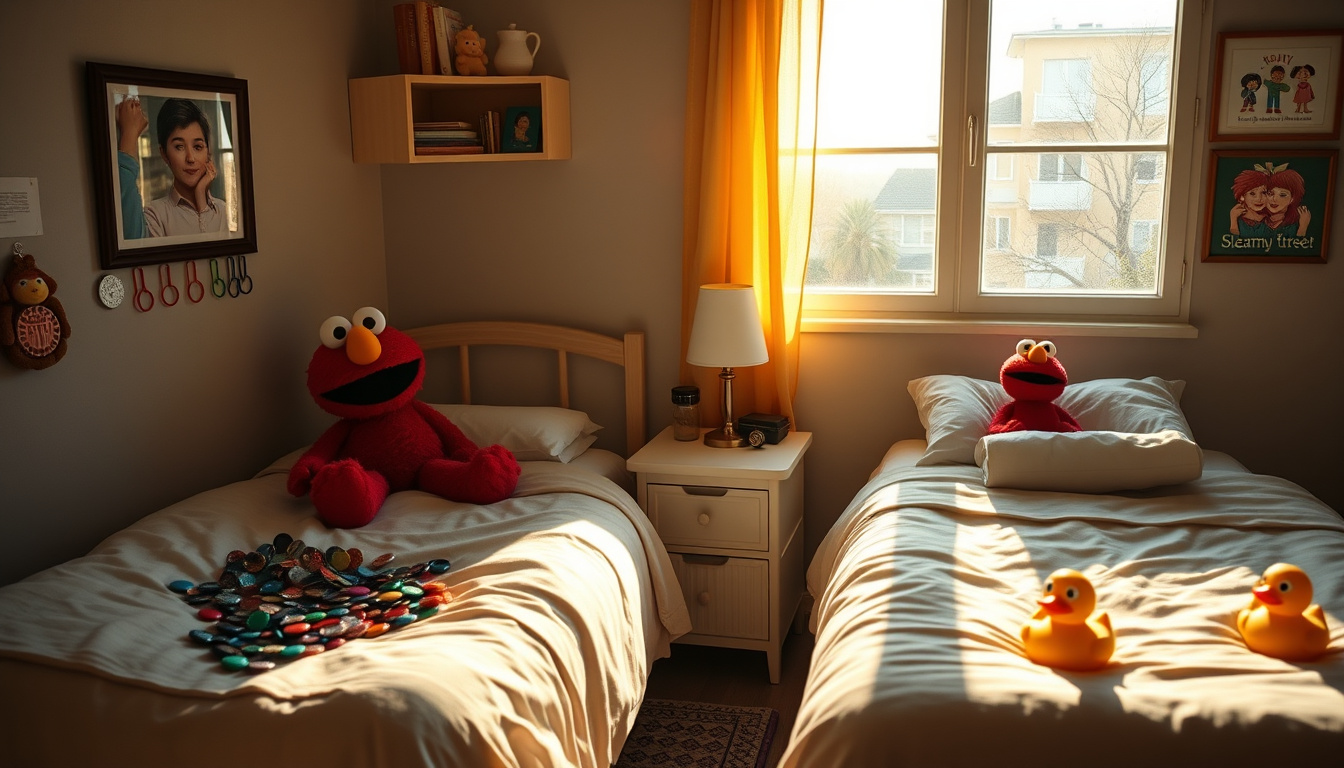
Official sources consistently describe Bert and Ernie as best friends who share an apartment as roommates. They occupy a shared bedroom featuring two separate single beds, a detail that has featured prominently in public discussions about their relationship. Sesame Workshop, the organization behind Sesame Street, maintains that the characters represent platonic friendship designed to teach children about cooperation and acceptance of differences.
The characters were explicitly created to model friendship for preschoolers, demonstrating how people with contrasting personalities can live together harmoniously and support one another. This educational purpose remains central to their portrayal across the decades of their appearance on the show.
Roommates and Best Friends
Their living arrangement has been consistent throughout the show’s history. Bert and Ernie share a home at 123 Sesame Street, where they navigate daily life together, from getting ready in the morning to going to bed at night. The separation of their sleeping spaces into individual beds counters assumptions some viewers have made about intimacy between the characters, though discussions about their relationship have continued regardless.
Fans and cultural commentators have noted similarities to the television dynamic portrayed in “The Odd Couple,” where two men with opposing personalities share living space. This parallel reinforces the platonic nature of Bert and Ernie’s relationship while acknowledging the warmth and closeness that characterize their friendship.
On-Screen Dynamic
Their interactions consistently demonstrate the push and pull of close friendship between different personality types. Ernie’s playful pranks and unexpected requests often leave Bert flustered, yet their bond remains strong. Bert’s patience with Ernie, while sometimes wearing thin, illustrates the patience required in lasting friendships.
These portrayals serve clear educational objectives, helping young children understand that friendships require flexibility, patience, and acceptance. The characters demonstrate that disagreements are natural and can be resolved without damaging underlying affection and respect.
Are Bert and Ernie Gay?
The question of whether Bert and Ernie are in a romantic relationship has generated significant public discussion over the decades. Sesame Workshop and the characters’ creators have consistently maintained that Bert and Ernie are puppets without sexual orientation, designed to represent platonic friendship between different personalities. According to PinkNews, the organization has repeatedly stated that the characters do not exist below the waist and have no sexual orientation.
Despite these official statements, speculation about the characters’ relationship continues to surface, particularly in discussions about LGBTQ+ representation in children’s media. The characters’ close friendship, shared living space, and emotional bond have led some viewers to interpret them as a gay couple, while others view them simply as best friends who happen to live together.
Sesame Workshop has maintained since 1994 that Bert and Ernie are not gay, not straight, and do not have a sexual orientation, describing them simply as puppets created to teach children about friendship.
Official Statements
In 1994, Sesame Workshop head Gary Knell clarified that “Bert and Ernie are not gay, not straight, they are puppets. They don’t exist below the waist.” This statement established the organization’s official position, which has remained consistent through subsequent decades of public inquiries.
Following renewed interest in 2018 after a writer claimed personal inspiration in creating the characters, Sesame Workshop reiterated their position. A spokesperson stated: “Bert and Ernie are best friends… they remain puppets and do not have a sexual orientation.” This response addressed claims made by writer Mark Saltzman, who told Queerty that he drew inspiration from his own relationship with partner Arnold Glassman when writing certain interactions between the characters.
Frank Oz, who originated the character of Bert, weighed in publicly via social media, stating: “They’re not [gay], of course… Why the need to define people as only gay?” This comment reflected his perspective as one of the original creators while acknowledging the broader cultural conversation about representation.
Cultural Interpretations
The characters have become symbols within LGBTQ+ communities, regardless of official statements. In 2013, The New Yorker featured Bert and Ernie on its cover, shown cuddling while watching news of the Supreme Court’s decision to overturn the Defense of Marriage Act. This portrayal resonated with readers who saw the characters as representing their own relationships.
A 2011 Change.org petition urging Sesame Workshop to allow the characters to marry garnered significant support following New York’s legalization of same-sex marriage. While the organization declined to change the characters’ portrayal, the petition demonstrated the emotional connection many viewers feel toward Bert and Ernie.
Some cultural commentators view the ongoing debate as reflecting broader questions about representation in children’s media. They argue that even if the characters were not designed as a gay couple, their close friendship and shared life represent types of relationships that LGBTQ+ families experience and value.
What Is the History of Bert and Ernie on Sesame Street?
Bert and Ernie were among the original characters developed for Sesame Street, which premiered as an educational television program designed to prepare preschool children for school. The characters’ creators, Jim Henson and Frank Oz, drew from their own friendship when developing the duo, intending to demonstrate how people with different temperaments can form lasting bonds.
Their debut in the 1969 pilot episode established patterns that would continue throughout the series’ run. Bert and Ernie represented one of the show’s central philosophies: that children can learn valuable social lessons through entertainment featuring characters who differ from one another yet care deeply for each other.
Debut and Evolution
The characters appeared in the July 1969 pilot episode, which was filmed before the show’s official premiere. From the beginning, Bert and Ernie lived together in their distinctive apartment, complete with the separate beds that have become a recurring element of their portrayal. Their home setting allowed for intimate glimpses into daily life that younger viewers could relate to their own experiences.
Over the decades, the characters have appeared in countless segments addressing topics from sharing and cooperation to dealing with disappointment and celebrating achievements. Their format has remained remarkably consistent, with Bert’s patience and Ernie’s enthusiasm providing a reliable framework for educational content.
The show’s approach to education has evolved alongside societal changes, yet Bert and Ernie’s core dynamic has remained stable. This consistency reflects the timeless nature of their friendship, which transcends specific cultural moments while remaining relevant to each new generation of viewers. The show’s approach to education has evolved alongside societal changes, yet Bert and Ernie’s core dynamic has remained stable, much like the enduring themes explored in Asterix bei den Olympischen Spielen.
Voice Actors Over Time
The character of Ernie was originally performed by Jim Henson himself from 1969 until 1990, capturing the playful spirit that defined the character during the program’s formative years. Steve Whitmire took over the role from 1990 until 2014, bringing his own interpretation while maintaining the character’s essential qualities. Billy Barkhurst currently performs Ernie, continuing the character’s tradition of bringing joy and laughter to young audiences.
Bert was originally performed by Frank Oz from 1969 until 2000, with occasional returns in subsequent years. Frank Oz’s portrayal established Bert’s fussy, organized personality that has remained consistent through subsequent performers. Eric Jacobson currently performs Bert, maintaining the character’s meticulous nature and enduring patience with his roommate’s antics.
The consistency of these performances across multiple decades speaks to the clear characterizations established by the original performers. Both Bert and Ernie have remained recognizable to generations of viewers who grew up watching the show, creating a sense of continuity that reinforces the characters’ reliability as educational figures.
When Did Key Events Happen in Bert and Ernie’s History?
Understanding the timeline of significant moments surrounding Bert and Ernie helps contextualize the ongoing discussions about their portrayal and cultural significance.
- 1969: Bert and Ernie debut in the Sesame Street pilot episode, establishing their friendship and living arrangement.
- 1990: Steve Whitmire takes over as Ernie following Jim Henson’s death, while Frank Oz continues as Bert.
- 1994: Sesame Workshop head Gary Knell publicly clarifies the characters’ status as platonic friends without sexual orientation.
- 2000: Frank Oz retires from regular performance of Bert; Eric Jacobson assumes the role.
- 2011: A Change.org petition calls for Bert and Ernie to marry following New York’s legalization of same-sex marriage.
- 2013: The New Yorker features the characters on its cover in a context suggesting same-sex partnership.
- 2014: Billy Barkhurst becomes the current performer of Ernie.
- 2018: Writer Mark Saltzman claims personal inspiration for the characters; Sesame Workshop and Frank Oz issue clarifying statements.
What Is Established Versus Unclear About Bert and Ernie?
Established Information
- Bert and Ernie debuted in 1969 on Sesame Street
- They were created by Jim Henson and Frank Oz
- The characters are best friends and roommates
- They sleep in separate single beds
- Their friendship models acceptance of differences
- Official sources describe them as having no sexual orientation
Areas of Uncertainty
- Whether individual writers incorporated personal experiences into specific scripts
- The full extent of creator intentions beyond documented statements
- How future portrayals may address ongoing discussions
- Whether represented relationships in children’s media should evolve to reflect contemporary families
Why Do Bert and Ernie Matter Culturally?
Bert and Ernie occupy a unique position in American cultural history as characters who have been present in children’s media for over five decades. Their enduring presence means that multiple generations of families have grown up watching the duo navigate friendship, disagreement, and reconciliation. This consistency provides a cultural touchstone that connects adults with their own childhoods while introducing their children to the same characters.
The characters also represent broader conversations about representation in media. Whether viewed as platonic friends or potential LGBTQ+ symbols, Bert and Ernie demonstrate how fictional characters can take on meaning beyond their creators’ intentions. Their cultural significance extends beyond the educational content of Sesame Street into discussions about what kinds of relationships children’s media should portray and how audiences interpret familiar figures.
Additionally, the characters illustrate how educational programming can address complex social concepts through accessible storytelling. Their friendship between different personalities teaches children that disagreement does not preclude affection, a lesson that remains valuable across changing cultural contexts.
What Have Creators Said About Bert and Ernie?
“Bert and Ernie are not gay, not straight, they are puppets. They don’t exist below the waist.”
— Gary Knell, Sesame Workshop President, 1994
“Bert and Ernie are best friends… they remain puppets and do not have a sexual orientation.”
— Sesame Workshop Statement, 2018
“They’re not [gay], of course… Why the need to define people as only gay?”
— Frank Oz, via social media, 2018
These statements from official sources and creators establish the framework within which Bert and Ernie have been portrayed. While individual writers may have drawn personal inspiration for certain storylines, the organizational position has remained consistent across multiple decades of public inquiry.
The tension between official statements and cultural interpretations reflects ongoing conversations about how children’s media should address themes of relationships and identity. Characters like Bert and Ernie remain central to these discussions precisely because of their enduring presence and the affection audiences feel toward them.
Key Takeaways About Bert and Ernie
Bert and Ernie represent one of television’s longest-running friendships, debuting on Sesame Street in 1969 and continuing to entertain and educate young audiences today. Their contrasting personalities—one serious and organized, the other playful and spontaneous—demonstrate that meaningful friendships can exist between people with entirely different approaches to life. As explained in our look at the relationship dynamics in popular fiction, such contrasting pairings have proven enduringly popular with audiences.
Official sources consistently describe the characters as platonic best friends without sexual orientation, a position maintained by Sesame Workshop and reinforced by creators including Frank Oz. However, cultural interpretations have sometimes viewed the characters differently, leading to ongoing discussions about representation in children’s media. These conversations reflect broader societal questions about what kinds of relationships children’s programming should depict and how audiences connect with fictional characters.
Regardless of interpretation, Bert and Ernie remain valuable educational figures who help children understand friendship, cooperation, and acceptance of differences. Their enduring presence across multiple generations of viewers demonstrates the lasting impact that well-developed characters can have on popular culture. The discussions surrounding them highlight how fictional friendships can take on meanings that extend far beyond their original educational purposes.
Frequently Asked Questions
Are Bert and Ernie based on real people?
Jim Henson and Frank Oz have stated that they modeled Bert and Ernie’s friendship on their own relationship, though the characters are fictional puppets rather than representations of specific individuals.
What is the Bert and Ernie controversy?
The controversy involves public debate over whether Bert and Ernie are in a romantic relationship. Sesame Workshop maintains they are platonic best friends without sexual orientation, while some viewers and cultural commentators interpret their close friendship as suggesting a gay relationship.
Do Bert and Ernie have separate beds?
Yes, the characters are shown sleeping in separate single beds within their shared bedroom at 123 Sesame Street. This detail has been used by officials to counter assumptions about intimacy between the characters.
Who currently voices Bert and Ernie?
Eric Jacobson currently performs Bert, a role he assumed in 2000 following Frank Oz’s retirement from regular performance. Peter Linz currently performs Ernie, taking over from Steve Whitmire in 2014.
Have Bert and Ernie always been roommates?
Yes, since their debut in the 1969 pilot episode, Bert and Ernie have been depicted as roommates sharing an apartment at 123 Sesame Street. Their living arrangement has remained consistent throughout the show’s history.
Why do people think Bert and Ernie are gay?
Viewers have interpreted their close friendship, shared living space, and emotional bond as suggesting a romantic relationship. In 2018, writer Mark Saltzman claimed he drew personal inspiration from his own relationship when writing certain scripts, though Sesame Workshop and creators maintain the characters do not have sexual orientations.
What did Frank Oz say about Bert and Ernie?
In 2018, Frank Oz stated via social media that the characters are not gay, questioning why people feel the need to define fictional characters as only gay. He had originally performed Bert from 1969 until 2000.
Related stories





Liam O'Brien covers Australian politics and public affairs for Aussie Brief.