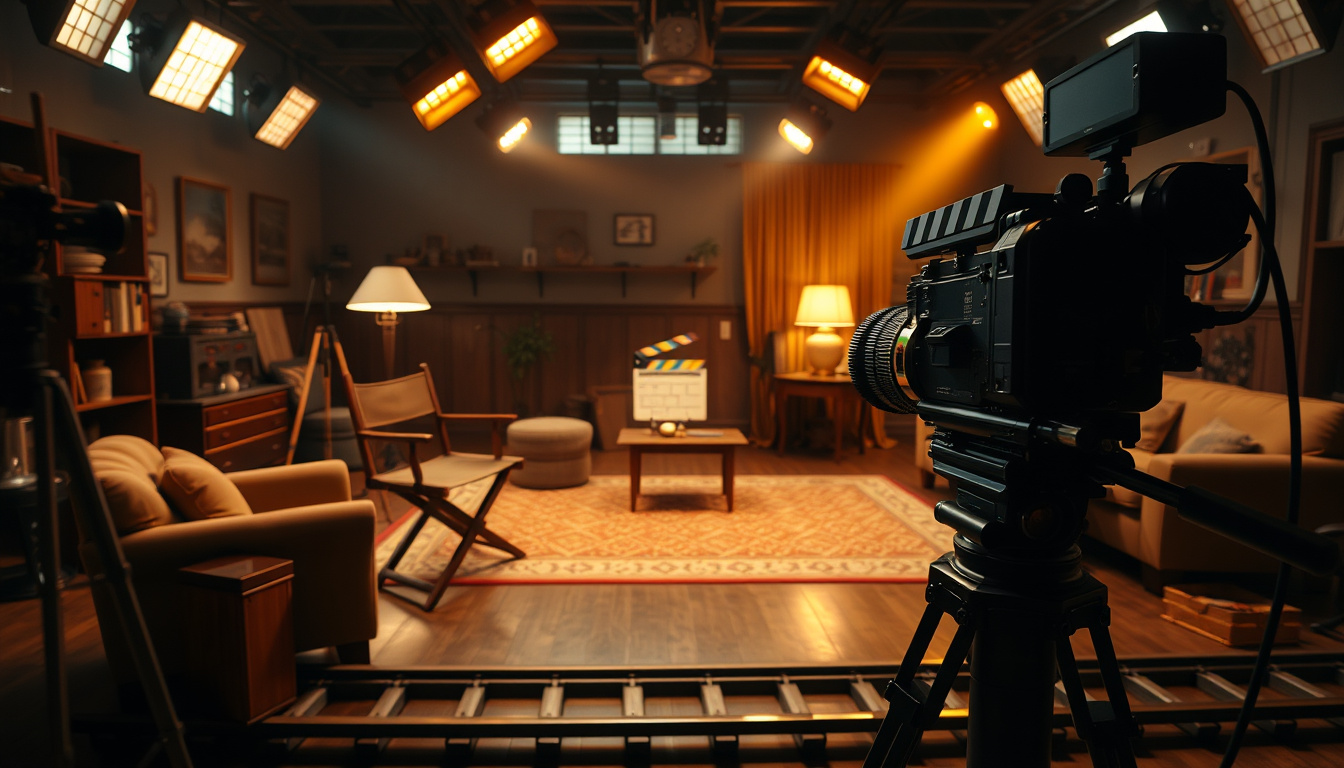

You’ve probably seen the term mise en scène in film reviews or behind-the-scenes features—it’s the French phrase meaning “placing on stage” that directors use to tell stories through every visual element in a frame. We’ll walk through its five core elements, pronunciation, and why it matters.
Origin of term: French theater, 19th century ·
Core elements: 5 ·
Pronunciation: /mee-zahn-sen/ ·
First use in film criticism: Early 20th century
Quick snapshot
- Mise en scène is a French term meaning “placing on stage” (French Wikipedia (encyclopedic source))
- Five elements are commonly accepted: setting, lighting, costume, staging, performance (Backstage (performing arts publication))
- Whether mise en scène includes sound or only visual elements (Ciné-club de Caen (French cinema analysis site))
- Exact number of elements varies among scholars (Elements of Cinema (film education site))
- Origin in French theater, 19th century (StudioBinder)
- Adopted by film criticism early 20th century (Elements of Cinema)
- Directors like Wes Anderson push mise en scène with symmetrical composition (StudioBinder) (French Ministry of Culture (official education resource))
- Digital tools expand color and depth possibilities (French Ministry of Culture (official education resource))
Five components are widely taught, but scholars have mapped up to 20 visual layers that directors orchestrate. Here’s the core set of facts every film student should know.
| Label | Value |
|---|---|
| Origin | French theater, 19th century |
| Core elements | 5 |
| Extended elements | 20 |
| Pronunciation | /mee-zahn-sen/ |
| First use in film | Early 20th century |
A director who masters mise en scène doesn’t just tell a story — they build a world that guides the audience’s eye and emotion, frame by frame. Without it, even the best script feels flat.
What is a mise-en-scène in a film?
Origins of the term
- Mise en scène translates to “placing on stage” from French (StudioBinder (film production resource))
- Originated in 19th-century theater as the arrangement of scenery and properties (StudioBinder)
- André Antoine, father of naturalist theater, defined it as “the art of setting on the boards the action and characters imagined by the dramatic author” (French Wikipedia (encyclopedic source))
Difference from cinematography
- Mise en scène covers everything visible in front of the camera: sets, props, lighting, costumes, actor blocking, composition (Elements of Cinema (film education site))
- Cinematography includes camera movement, lens choices, and the technical apparatus behind the camera (Elements of Cinema)
- André Bazin, the influential film critic, described mise en scène as the choreography between performers and the camera (Elements of Cinema)
Many beginners lump mise en scène and cinematography together. The distinction is simple: mise en scène is what you see; cinematography is how you capture it.
The implication: understanding mise en scène first gives you a stronger lens for analyzing any film, because it separates the design of the image from the technology used to record it.
What are the five elements of a mise-en-scène?
Setting
- Setting establishes time and place, from a cramped apartment to a sprawling battlefield (Backstage (performing arts publication))
- Every object in the set — props, furniture, architecture — carries narrative meaning (Ciné-club de Caen (French cinema analysis site))
Lighting
- Lighting intensity, depth, and angle affect scene mood and focus (StudioBinder)
- High-key lighting suggests comedy or openness; low-key lighting creates suspense (Backstage)
Costume and makeup
- Costumes reveal character, period, social status, and personality (Backstage)
- Makeup and hair contribute to the visual identity of actors (StudioBinder)
Staging and blocking
- Staging defines how performers move within the frame and relate spatially (Elements of Cinema)
- Blocking directs the audience’s attention and reveals power dynamics (StudioBinder)
Performance
- Performance includes acting, facial expressions, and movement (Backstage)
- Actors’ gestures and reactions are as much a part of the frame as the set design (Ciné-club de Caen)
Relying too heavily on one element — say, elaborate costumes without meaningful blocking — can make a scene feel visually loud but narratively hollow. Balance is key.
What this means: each element works like an instrument in an orchestra. When they’re in harmony, the audience absorbs the story effortlessly. When one is off, the whole scene feels wrong — even if viewers can’t say why.
How do you pronounce mise en scène?
Phonetic breakdown
- Pronunciation: /mee-zahn-sen/ (StudioBinder)
- The final “e” in scène is silent (Backstage)
Common mispronunciations
- Often mispronounced as “meez-en-seen” with a hard “seen” (Backstage)
- The correct French sound is “zahn” not “zane” (StudioBinder)
The pattern: mispronunciations usually come from reading the phrase as English. Once you hear it in a film class or a behind-the-scenes feature, it sticks.
What are examples of mise en scène?
Classic films
- Citizen Kane (1941) uses deep focus and layered staging to keep foreground and background in sharp detail (Elements of Cinema)
- Blade Runner (1982) uses dense set design, neon lighting, and constant rain to build a dystopian atmosphere (Backstage)
Modern films
- The Grand Budapest Hotel (2014) uses symmetrical compositions and pastel color palettes to create a storybook world (StudioBinder)
- Parasite (2019) uses spatial blocking and vertical staging to represent class divides (French Ministry of Culture)
Why this matters: these examples show that mise en scène isn’t just decoration — it’s the primary way directors make abstract ideas like power, isolation, or hope physically visible.
What are the 5 C’s of film?
Camera Angles, Continuity, Cutting, Close-ups, Composition
- The Five C’s are a set of cinematography techniques introduced by Joseph V. Mascelli (StudioBinder)
- Composition — how elements are arranged within the frame — overlaps directly with mise en scène (Elements of Cinema)
- Mise en scène contributes to the visual storytelling of each C: for example, lighting and blocking affect camera angles (Backstage)
The implication: the Five C’s and mise en scène are complementary. To master one, you need to understand the other.
Clarity: Confirmed vs. Unclear
Confirmed facts
- Mise en scène is a French term meaning “placing on stage” (StudioBinder)
- Five elements are commonly accepted (setting, lighting, costume, staging, performance) (Backstage)
What’s unclear
- Whether mise en scène includes sound or only visual elements (Ciné-club de Caen)
- Exact number of elements varies among scholars (Elements of Cinema)
Quotes on mise en scène
Mise en scène refers to everything visible in front of the camera.
— StudioBinder (film production resource)
Mise en scène is what elevates filmmaking to an art form.
— Backstage (performing arts publication)
For directors and film lovers, those two perspectives capture both the craft and the ambition behind every deliberate frame.
Summary
Mise en scène is the visual vocabulary that separates a competent film from a memorable one. For aspiring filmmakers, the lesson is clear: study setting, lighting, costume, staging, and performance as a unified system, not separate tasks. For viewers, paying attention to these elements transforms passive watching into active analysis. For both aspiring filmmakers and active viewers, that payoff is a richer, more critical appreciation of cinema — one frame at a time.
Related reading: Caught Stealing (Film)
Frequently asked questions
Is mise en scène only used in film?
No. It originated in theater and is still widely used in stage productions, but film adopted the term to describe all visual elements within the frame.
How does mise en scène differ from cinematography?
Mise en scène covers everything in front of the camera (sets, lighting, actors). Cinematography involves the camera itself: movement, lens, film stock, and shooting technique.
Who is known for masterful mise en scène?
Directors like Stanley Kubrick, Wes Anderson, Akira Kurosawa, and David Fincher are celebrated for their meticulous control of visual elements.
Can mise en scène include color grading?
Color grading is part of post-production cinematography, but the original color choices in set design, costumes, and lighting are part of mise en scène. The line is often debated.
What is the role of the director in mise en scène?
The director oversees all visual elements — in collaboration with set designers, cinematographers, costume designers, and actors — to ensure every detail supports the story.
How do you analyze mise en scène in a movie?
Start by noting actor positioning, lighting style, shooting angles, visible props, and camera movement. Ask how each element reinforces the scene’s mood or theme.
Does mise en scène change between genres?
Yes. Horror uses shadow and off‑center staging to create unease; musicals use bright colors and open blocking for energy; noir uses low‑key lighting and tight frames.

Grace Clarke leads fact-checking, source verification and corrections at Aussie Brief.