
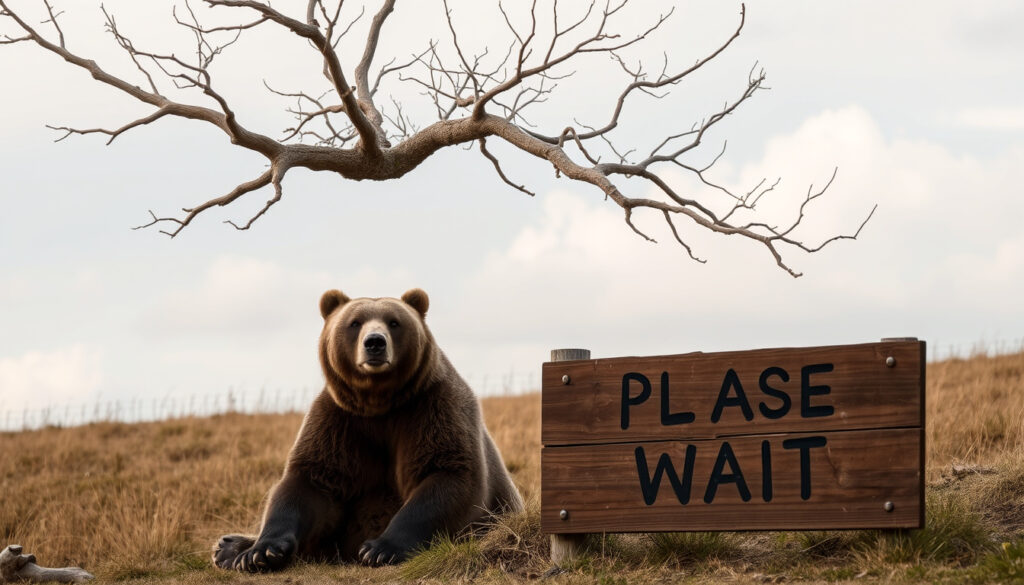
You’ve typed it in an email, a Slack message, or a quick text: “Please bare with me.” Then a doubt creeps in: Is it “bear” or “bare”? The split-second uncertainty is completely normal because these two words sound exactly the same, and this article settles the question once and for all.
Correct spelling: bear with me ·
Core meaning: have patience ·
Common mistake: bare with me ·
Part of speech: verb phrase ·
Usage context: polite request
Quick snapshot
- Spelled bear with me LanguageTool
- Uses verb bear (to carry/endure) LanguageTool
- Standard in all English dialects LanguageTool
- Polite request for patience Grammarly
- Implies temporary delay ProWritingAid
- Root: endure/carry a burden ProWritingAid
- Bare with me is incorrect Grammarly
- Bare = uncover, naked Merriam-Webster
- Often seen in informal writing Grammarly
- “Please bear with me while I check.” LanguageTool
- “Bear with me — I’m new to this.” ProWritingAid
- “If you’ll just bear with me…” Instructional Solutions
Five key facts, one pattern: every authoritative source lands on the same side — bear with me is the only accepted form when asking for patience.
The following comparison highlights the critical difference between the correct and incorrect forms:
| Aspect | Bear with me | Bare with me |
|---|---|---|
| Meaning | Have patience (endure) | Uncover or get naked |
| Correct usage | Yes – standard idiom | No – common error |
| Example | “Please bear with me.” | “Please bare with me.” (incorrect) |
| Field | Value |
|---|---|
| Correct spelling | bear with me |
| Meaning | have patience with me |
| Part of speech | verb phrase |
| First known use | 16th century |
| Common misspelling | bare with me |
Is it bare or bear with me?
The short answer: bear with me — always. The verb bear means to carry, endure, or tolerate. That makes perfect sense when you’re asking someone to “endure with you” while you finish what you’re doing. Bare, on the other hand, means to uncover or reveal. “Bare with me” would literally mean “reveal something with me” or “get undressed with me” — an entirely different request (Merriam-Webster’s usage note).
One letter that flips meaning from “please be patient” to “please undress” — a reminder that homophones demand precision in professional writing.
The correct spelling explained
- “Bear with me” uses the verb bear, meaning to tolerate or endure. When you say “bear with me,” you are literally asking someone to “endure with me” for a short while (Proofed’s grammar tips).
- The phrase is an idiomatic request for patience, and it appears in this fixed form in every major English dictionary (GrammarBook).
Why “bare with me” is a common error
- Because bear and bare are homophones — they sound identical — writers often guess the wrong spelling.
- “Bare” is a familiar verb in phrases like “bare your soul” or “bare arms,” so it feels plausible (ProWritingAid).
- The mistake is so widespread that style guides routinely flag it as one of the most common homophone errors in English (Grammarly).
The implication: the burden of spelling correctly falls on the writer, because the reader hears the same sound either way.
What does “bear with me” mean?
Definition in modern English
- Bear with me (verb phrase): “Please be patient with me while I do something that may take a short while.” (GrammarBook)
- It appears in both formal and informal English, with the same meaning in all dialects: American, British, Australian, and others.
Synonyms and alternative phrases
The table below shows common alternatives to ‘bear with me’:
| Phrase | Context |
|---|---|
| Please be patient | Direct and polite |
| Hang on / Hold on | Informal, especially in speech |
| Just a moment | Short request, neutral |
What this means: bear with me is the only idiomatic choice for a polite, educated request. Alternatives exist, but none carry the same tone of respect.
Why do we say “bear with me”?
Etymology and historical roots
- The verb bear descends from Old English beran (to carry, to bring), which traces back to Proto-Germanic *beraną and ultimately to the Proto-Indo-European root *bher- (to carry).
- The figurative sense “to endure or tolerate” developed early, and by the 16th century the phrase “bear with” was firmly established in English (ProWritingAid).
Connection to the verb “to bear”
When you ask someone to “bear with me,” you are metaphorically asking them to help carry a burden — the burden of waiting. The same verb appears in expressions like “bear the weight,” “bear a grudge,” and “bear responsibility.” Bare has no such weight-bearing meaning (Merriam-Webster).
Knowing the etymology turns a spelling rule into a mental image: picture a bear carrying a heavy load — that load is the few seconds you’re asking for.
The pattern: the figurative meaning of ‘bear’ as ‘endure’ is deeply rooted in language history, reinforcing why the spelling is non-negotiable.
Does bare with me make sense?
Grammatical breakdown of “bare with me”
Grammatically, “bare with me” is a perfectly valid English sentence — but only if you actually mean “uncover with me.” The verb bare (to uncover) has exactly one meaning in this context: to reveal, strip, or expose. Unless you are inviting someone to undress, the sentence is contextually wrong (GrammarBook).
When “bare” might be correct (rare contexts)
- In poetry, wordplay, or deliberately suggestive puns: “Bare with me under the stars.”
- In instruction manuals for gardening (bare root plants) or construction (bare wires) — but even then the phrase “bare with me” is almost never the intended meaning (Proofed).
The catch: in standard professional or academic writing, “bare with me” will be flagged as an error 100% of the time.
How to use “bear with me” in a sentence?
Formal and informal examples
Here are examples of ‘bear with me’ in different contexts:
| Context | Example |
|---|---|
| Professional email | “Please bear with me while I locate the file you requested.” |
| Presentation | “Bear with me — I’ll get to the data in a moment.” |
| Customer support | “Thank you for bearing with us during this outage.” |
| Casual conversation | “Bear with me, I’m still learning.” |
Common structures with “please” and “just”
- “Please bear with me while [action].” — most frequent pattern.
- “Just bear with me for a second.” — informal, friendly.
- “If you’ll bear with me, I’ll explain.” — hypothetical, polite.
The pattern: using ‘bear’ ensures clarity and professionalism in every context.
What we know for sure — and what’s still fuzzy
Confirmed facts
- “Bear with me” is the correct spelling (Grammarly)
- “Bare with me” is a common error (Instructional Solutions)
- The phrase means “have patience with me” (ProWritingAid)
- The verb bear in this sense means to endure or tolerate (Merriam-Webster)
- The expression dates back to at least the 16th century
What’s unclear
- The exact first recorded instance of the idiom “bear with me” is not precisely documented; early attestations are spread across 16th-century texts
- Whether the metaphorical extension from physical carrying to emotional enduring happened before or after the Old English period is debated by linguists
- The exact percentage of writers who make the error is unknown
- The influence of social media on the spread of the error is not quantified
- The exact number of style guides that list this error is not compiled
Quotes from language authorities
Below, four respected sources weigh in on the bear/bare distinction:
“The verb bare has only one meaning: to uncover. All other verb uses are bear — including bearing children, bearing south, and bearing with me.”
— Merriam-Webster (authoritative dictionary)
“Bear with me means ‘be patient with me’ — the speaker is asking the listener to wait or to tolerate a delay.”
— Grammarly (writing assistance platform)
“To bear means to tolerate or endure. If you write ‘bare with me’ you are literally asking someone to ‘reveal something with you’ or to ‘get undressed with you’.”
“To be patient and wait while someone does something: ‘Bear with me a moment while I find the form.’”
For anyone who sends emails, writes reports, or texts professionally, the choice is clear: use bear with confidence, or risk a typo that changes the entire meaning of your request.
Related reading: Mise en Scène Definition · How to Write a Mission and Vision Statement
Frequently asked questions
Can “bear with me” be used in formal writing?
Yes. It is perfectly acceptable in business correspondence, academic papers, and formal speeches. Many style guides list it as a standard polite phrase (Proofed).
Is “bear with me” followed by a comma?
Usually yes. In most modern usage guides, a comma follows the phrase when it introduces a clause: “Bear with me, please.” However, in very short requests like “Bear with me a moment,” the comma is optional (GrammarBook).
What is a synonym for “bear with me”?
Common synonyms include “please be patient,” “hold on,” “hang on,” and “wait a moment.” Each carries a slightly different register — “bear with me” is the most polite and neutral (GrammarBook).
How do you say “bear with me” in other languages?
Many languages have a direct equivalent: French “veuillez patienter”, Spanish “tenga paciencia”, German “haben Sie Geduld”. The English idiom is unique in its use of “bear” as a verb of endurance.
Is “bear with me” a command or a request?
It is a polite request. The imperative structure “bear with me” is softened by the idiomatic meaning — it is not a command but a courteous appeal. Adding “please” makes the request explicit (ProWritingAid).
Does “bear with me” have a negative connotation?
No. It implies that the speaker recognizes they are causing a delay and asks for patience politely. The connotation is respectful, not apologetic (Instructional Solutions).
What is the difference between “bear with me” and “bare with me”?
“Bear with me” is correct and means “have patience.” “Bare with me” would mean “uncover with me” and is therefore incorrect for any standard request for patience (Merriam-Webster).
When should I use “bear with me” vs “bear with someone”?
“Bear with me” addresses the listener directly. “Bear with someone” describes a third party’s patience: “I hope you’ll bear with my colleague while she finds the file.” Both use the same verb form and meaning (GrammarBook).

Ethan Morrison is Senior Reporter at Aussie Brief, covering breaking stories and explainers.