The Architecture of Everyday Carry
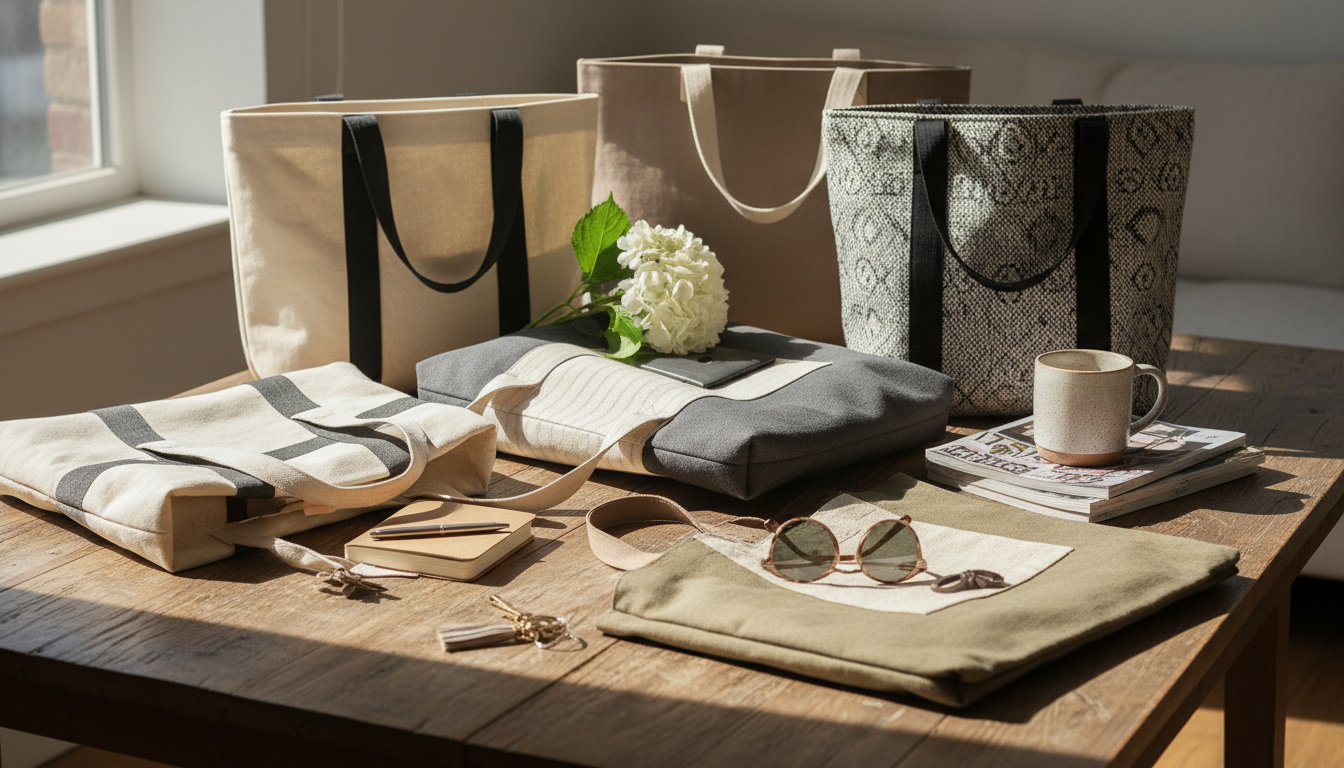
The tote bag has evolved from utilitarian vessel to defining accessory, navigating the space between function and aesthetic statement. Contemporary iterations reflect shifting priorities—durability intersects with environmental consciousness, while minimalist silhouettes accommodate maximalist lifestyles. Understanding the material science and historical trajectory of these carriers reveals why certain constructions outperform others across varying contexts.
Material Matrix: Performance and Context
Four primary categories dominate the current landscape, each offering distinct tactile and functional properties. Canvas provides substantiality through cotton duck or sailcloth weights, developing a patina that records usage patterns. Full-grain leather offers structural integrity that softens without collapsing, suitable for professional environments requiring polished presentation. Recycled nylon, often recovered from ocean plastics or industrial waste, delivers water resistance at minimal weight penalties. Jute and hemp present raw, textural alternatives for organic-minded consumers, though they sacrifice weather resistance.
Selection ultimately depends on load-bearing requirements and maintenance willingness. A comprehensive examination of fashion archives reveals how material preferences shifted from purely decorative to function-first following the 1960s liberation movements.
Market Dynamics and Behavioral Shifts
Recent consumption patterns indicate a migration away from disposable carriers toward investment-grade pieces. Women increasingly prioritize trans-contextual versatility—bags that transition from morning commutes to evening engagements without aesthetic dissonance. This utility-maximization trend correlates with broader sustainability research indicating reduced purchase frequency when initial quality thresholds meet daily demands.
The sustainable collections emerging from Australian designers exemplify this philosophy, emphasizing repairable construction and biodegradable components over trend-driven obsolescence.
| Material | Tensile Strength | Weight Class | Care Protocol | Environmental Impact |
|---|---|---|---|---|
| Heavy Canvas | High | 450-600 gsm | Spot clean/air dry | Biodegradable |
| Vegetable-Tanned Leather | Very High | 1.2-1.4 mm thickness | Conditioning treatment | Chrome-free processing |
| Recycled Nylon | Moderate | Lightweight | Machine washable | Ocean plastic diversion |
| Waxed Cotton | High | Medium | Rewaxing required | Petrochemical coating |
Construction Integrity and Failure Points
Longevity correlates directly with stress-point engineering rather than surface aesthetics. Reinforced box-stitching at handle attachments prevents tear-out under dynamic loads, while gusseted bases distribute weight across the full floor width rather than concentrating stress at seams. Unlined leather bags allow the material to breathe and flex, whereas canvas benefits from water-resistant internal coatings that prevent saturation wicking.
Museum exhibitions on carry culture document how 19th-century maritime construction techniques—particularly the saddle-stitch and riveted stress points—continue informing contemporary high-end manufacturing. These methods ensure that daily wear manifests as character development rather than structural compromise.
Chronological Development
The modern tote descends from the introduction of the canvas ice carrier, designed for utilitarian transport rather than personal expression. By the , bohemian movements repurposed these open vessels as anti-establishment statements against rigid handbag formalism. The witnessed luxury houses adopting the silhouette, introducing hardware embellishments and monogram treatments that shifted perception toward status signaling.
Contemporary iterations reflect innovation in material science, with marine plastic recovery programs supplying raw fiber for technical weaves. This evolution traces a trajectory from pure utility through conspicuous consumption toward ethical functionality.
Dispelling Functional Myths
Common misconceptions persist regarding capacity limitations and seasonal appropriateness. Canvas totes, when constructed from 18-ounce duck cloth, exceed the load-bearing capacity of many leather alternatives, contrary to assumptions about material hierarchy. Similarly, unlined leather performs adequately in precipitation when properly conditioned, dispelling the notion that natural materials require fair-weather protection.
Structural collapse in soft-sided bags typically results from inadequate base reinforcement rather than material deficiency. Industry standards for canvas specification clarify that ounce-weight ratings directly correlate with vertical stability, explaining why lighter twill weaves sag under laptop loads while duck constructions maintain profile.
Ergonomic and Aesthetic Analysis
Handle length determines carrying mechanics—shorter drops accommodate hand-carrying but restrict shoulder placement, while longer straps enable cross-body security during transit. The intersection of strap width and material density affects pressure distribution across the shoulder girdle, particularly relevant for loads exceeding three pounds.
Colorfastness considerations vary by dye method. Vegetable-tanned leather darkens with UV exposure and oil contact, creating individualized surfaces. Conversely, solution-dyed nylon maintains consistent hue but resists patina development. These characteristics inform selection based on whether the user prioritizes stability or evolution.
Practitioner Perspectives
“The tote represents democratic design—accessible in form but infinite in refinement possibilities. A woman chooses not just a container, but a system of organization that externalizes her daily requirements.”
— Elena Vostrova, Leatherworker and Accessory Designer
This perspective aligns with historical documentation of wartime design, where functionality emerged as aesthetic virtue. Contemporary users continue this tradition, selecting pieces that accommodate technology, sustenance, and emergency provisions without compartmentalization.
Integration Recommendations
Optimal selection requires honest assessment of daily cargo—laptops demand padded division, while produce benefits from washable interiors. Those navigating multi-modal transit should prioritize security closures, whereas studio environments accommodate open-top accessibility. Consult maintenance guides specific to material compositions before committing to high-investment pieces, as care requirements vary significantly between protein-based and plant-based fibers.
Ultimately, the ideal tote disappears into routine—sufficiently capacious to prevent overflow, sufficiently structured to prevent chaos, and sufficiently constructed to outlast fleeting stylistic cycles.
Frequently Asked Questions
What dimensions accommodate standard laptop sizes while maintaining proportional aesthetics?
Base measurements of 40cm width by 35cm height provide adequate clearance for 15-inch devices without excessive bulk. Depth should exceed 10cm to prevent side-pressure on electronics when the bag carries additional items. Vertical orientation generally appears more streamlined than horizontal layouts for professional contexts.
How does one prevent leather handles from darkening due to hand oils?
Regular conditioning with neutral leather balm creates a protective barrier, though some darkening remains inevitable and desirable as character development. For those seeking color stability, bridle leather or glazed finishes resist absorption more effectively than aniline-dyed alternatives. Rotation between multiple bags also distributes wear patterns.
Are canvas totes genuinely sustainable compared to synthetic alternatives?
Organic cotton requires significant water inputs during cultivation, potentially exceeding the environmental footprint of recycled petroleum-based fibers. However, end-of-life biodegradability favors natural materials, provided hardware components (rivets, magnetic snaps) are removed prior to composting. The sustainability calculation depends primarily on usage frequency—durability extending lifespan outweighs material origin.
Can unstructured totes provide sufficient protection for fragile electronics?
Without internal framing, soft-sided bags rely on strategic packing and sleeve accessories for impact absorption. Felt organizers or padded inserts convert unstructured interiors into compartmentalized systems. The bag itself provides dust and scratch protection rather than crush resistance, necessitating careful handling during transit.
Related stories





Liam O'Brien covers Australian politics and public affairs for Aussie Brief.