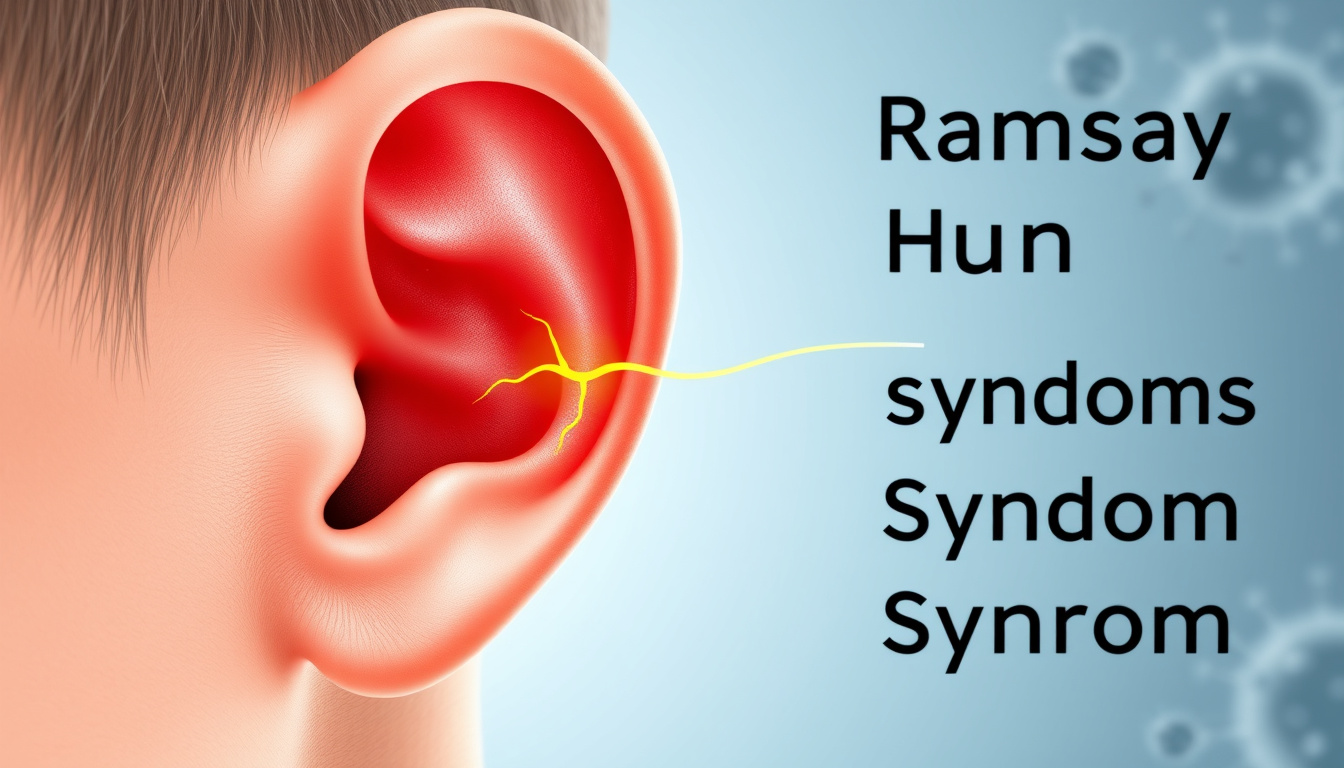
A sudden facial droop is unsettling enough, but when it’s accompanied by a painful, blistery rash inside one ear, it’s a specific medical red flag that few have heard of. That’s Ramsay Hunt syndrome, a complication of the varicella-zoster virus that demands urgent action. This article cuts through the confusion by focusing on the early clues that separate it from Bell’s palsy and lays out the treatment windows and recovery stages that can make a real difference.
Cases per 100,000 people annually: 5 ·
Percentage of shingles cases that develop into Ramsay Hunt syndrome: 1–2% ·
Time from rash onset to treatment for best outcome: within 72 hours ·
Recovery rate with early antiviral treatment: approximately 70%
Quick snapshot
- Reactivation of varicella-zoster virus causes Ramsay Hunt syndrome (Cleveland Clinic)
- Antiviral treatment within 72 hours improves outcomes (Facial Paralysis Institute)
- Why the virus reactivates in specific individuals is not fully understood (PMC (NIH))
- Long-term prognosis varies widely and cannot be predicted at onset (Ramsay Hunt Syndrome Foundation)
- Days 0–3: ear pain and rash appear; antiviral therapy ideally started (Cleveland Clinic)
- After 6 months: risk of permanent facial weakness or hearing loss increases (Mayo Clinic)
- Start antiviral and corticosteroid therapy immediately if within 72-hour window (Cleveland Clinic)
- Plan for 8–12 months of recovery; consider physical therapy and eye protection (UNC Facial Nerve Center)
| Label | Value |
|---|---|
| Cause | Varicella-zoster virus (same as chickenpox and shingles) |
| Key symptom difference from Bell’s palsy | Painful ear rash |
| Standard treatment window | Within 72 hours of rash onset |
| Full recovery rate with early treatment | About 70% |
| Common sequelae | Facial weakness, hearing loss, postherpetic neuralgia |
The implication: missing the rash can delay antiviral treatment by days, directly lowering the odds of complete recovery.
What is the cause of Ramsay Hunt syndrome?
Reactivation of the varicella-zoster virus
- The same virus that causes chickenpox and shingles — varicella-zoster virus — lies dormant in nerve tissue after a childhood chickenpox infection. In some people, it reactivates years later and travels along the facial nerve (Cleveland Clinic). When that reactivation targets the facial nerve near the ear, the result is Ramsay Hunt syndrome, also known as herpes zoster oticus.
How the virus reaches the facial nerve
- From the dorsal root ganglia where the virus has been sleeping, it migrates down the sensory branches of cranial nerve VII. The inflammation and swelling it triggers inside the narrow bony canal of the ear is what produces the classic triad of pain, rash, and paralysis (PMC (NIH)).
The pattern is clear: the virus follows the nerve like a path of least resistance, and the nerve pays the price. Why it reactivates in one person but not another is still an open question in neurology.
What are the early signs of Ramsay Hunt syndrome?
Painful ear rash
- Severe ear pain often strikes first, followed within days by a red, blistering rash on the outer ear, inside the ear canal, or even on the hard palate. This is the hallmark that distinguishes Ramsay Hunt from Bell’s palsy (Mayo Clinic).
Facial paralysis on one side
- Sudden drooping of the forehead, eyebrow, and mouth on the same side as the rash develops quickly. The patient may struggle to close the eye on that side, leading to dryness and potential corneal damage (Cleveland Clinic).
Hearing changes and vertigo
- Hearing loss, tinnitus (ringing in the ear), dizziness, and altered taste on the front two-thirds of the tongue are common companions. These vestibular symptoms are a direct result of viral inflammation near the inner ear structures (Mayo Clinic).
The catch: the presence of ear rash with facial droop is not just a diagnostic clue — it’s a timer. The clock starts ticking the moment the rash appears, and every hour before treatment matters.
How is Ramsay Hunt syndrome treated?
Antiviral medications
- Oral antivirals such as acyclovir or valacyclovir are the backbone of treatment. The goal is to stop viral replication in its tracks, and the evidence shows that starting within 72 hours of rash onset produces the best results (Cleveland Clinic).
Corticosteroids
- Prednisone is typically added to bring down the intense nerve inflammation. Combination therapy — antivirals plus steroids — has been shown to produce significantly better facial function recovery than steroids alone (PMC (NIH)).
Pain management
- Neuropathic pain from the inflamed nerve may require more than standard pain relievers. Anticonvulsants like gabapentin, lidocaine patches, or even opioid-sparing approaches are used to control the often-searing ear pain that can persist for weeks (Mayo Clinic).
The implication: prompt treatment dramatically shifts the odds, but even with optimal therapy, full recovery is not guaranteed. The Murakami et al. 2004 data from the NIH found 75% complete recovery if treated within 3 days, dropping to 48% if treatment started at 4–7 days (PMC (NIH)). That 27-percentage-point gap is the cost of waiting.
A patient who recognizes the painful ear rash within the first 72 hours and seeks antiviral therapy immediately faces roughly 3 in 4 odds of complete facial recovery. Delay past that window flips the script, making permanent weakness or synkinesis far more likely.
How long does it take to recover from Ramsay Hunt syndrome?
Factors affecting recovery time
- Age, overall health, severity of initial nerve damage, and most critically, the speed of treatment all influence the length and completeness of recovery (Cleveland Clinic). Older adults and those with severe initial paralysis tend to have longer and less complete recoveries.
Typical recovery stages
- Days 0–3: Ear pain and rash appear; antiviral therapy ideally started.
- Days 4–14: Facial paralysis develops; peak inflammation; corticosteroids initiated.
- Weeks 3–8: Inflammation subsides; partial or full return of facial movement may begin.
- Months 3–6: Ongoing recovery; some patients require physical therapy or eye protection.
- After 6 months: If no improvement, risk of permanent facial weakness or hearing loss increases.
The first sign of recovery is often a return of muscle tone — the face looks less droopy — days before voluntary movement reappears (Crystal Touch). After about 6 months, if no progress is seen, the door to full spontaneous recovery starts to close, and interventions like facial therapy or Botox for synkinesis become the focus (Ramsay Hunt Syndrome Foundation).
How is Ramsay Hunt syndrome different from Bell’s palsy?
Three crucial points separate these two conditions, and missing them can change a patient’s trajectory entirely.
| Feature | Ramsay Hunt Syndrome | Bell’s Palsy |
|---|---|---|
| Cause | Varicella-zoster virus reactivation | Often herpes simplex virus or idiopathic inflammation |
| Painful ear rash | Present (vesicles on ear or in canal) | Absent |
| Hearing loss or vertigo | Common | Rare |
| Severity of nerve damage | More severe, longer recovery | Milder on average |
| Full recovery rate | ~70% with early treatment | ~85% without treatment |
| Antiviral treatment | Essential part of protocol | Not standard unless herpes suspected |
The implication: Bell’s palsy usually resolves well on its own, but Ramsay Hunt syndrome demands aggressive antiviral intervention. Mistaking one for the other can mean losing the critical 72-hour treatment window — and with it, a significant chance at full recovery (UNC Facial Nerve Center).
Quotes from medical experts
Ramsay Hunt syndrome is a complication of shingles — specifically, an episode of herpes zoster that involves the facial nerve near the ear.
— Mayo Clinic
The main difference between Ramsay Hunt syndrome and Bell’s palsy is the presence of a painful rash in the ear. Bell’s palsy does not cause the rash.
— Cleveland Clinic
Standard treatment includes antiviral medication and corticosteroids, ideally started within three days of symptom onset.
— NIH StatPearls
For the patient staring at a lopsided smile and a blister-filled ear, the choice is clear: call a doctor immediately, not tomorrow. The 72-hour window is the single most important variable in whether recovery is complete or complicated by permanent nerve damage.
Related reading: Calcium Score Test: Normal Range, Procedure & Worth It? · Clinical Reasoning Cycle – Complete Guide to 8 Stages
For a detailed overview of symptoms and treatment options, see this article on Ramsay Hunt syndrome.
Frequently asked questions
Can Ramsay Hunt syndrome affect both sides of the face?
It is extremely rare. Almost all cases are unilateral because the virus reactivates from a single dorsal root ganglion on one side. Bilateral cases have been reported but are exceptional (PMC (NIH)).
Is Ramsay Hunt syndrome contagious?
The varicella-zoster virus itself is contagious through direct contact with the rash. People who have never had chickenpox or the vaccine could catch chickenpox from the active blisters. However, the syndrome itself is not transmitted; it’s a reactivation of a latent virus (Mayo Clinic).
Can you get Ramsay Hunt syndrome without having had chickenpox?
No. The varicella-zoster virus can only reactivate if it is already present in the body from a previous chickenpox infection. People vaccinated with the varicella vaccine can theoretically develop shingles later, but the risk is lower than after natural infection (PMC (NIH)).
Does stress trigger Ramsay Hunt syndrome?
Stress is considered a potential trigger for reactivation of the varicella-zoster virus, though the exact mechanism is not fully understood. Other triggers include immunosuppression, illness, and aging (Cleveland Clinic).
Can Ramsay Hunt syndrome be prevented with the shingles vaccine?
The shingles vaccine (Shingrix) significantly reduces the risk of shingles and its complications, including Ramsay Hunt syndrome. It is recommended for adults 50 and older and for immunocompromised adults 19 and older (PMC (NIH)). The incidence of Ramsay Hunt syndrome has been decreasing due to the varicella-zoster vaccine.
What should I do if I notice a rash and facial droop?
Seek medical attention immediately. Go to an urgent care clinic or emergency room and tell the doctor you suspect Ramsay Hunt syndrome. The 72-hour window for antiviral treatment begins at rash onset, not when you see a specialist (Facial Paralysis Institute).
Is Ramsay Hunt syndrome the same as shingles?
Not exactly. Ramsay Hunt syndrome is a specific complication of shingles where the virus reactivates in the facial nerve near the ear. It is a more severe form of shingles that adds facial paralysis and potential hearing loss to the standard shingles symptoms (Cleveland Clinic).

Ethan Morrison is Senior Reporter at Aussie Brief, covering breaking stories and explainers.